
What does upstage mean?
Upstage has two connected uses. Literally, it refers to the part of a stage farthest from the audience, so an actor might move upstage or enter from upstage left. Figuratively, to upstage someone means to treat that person as less important or to divert attention away from them. The figurative use often suggests deliberate self-promotion: one person may upstage a colleague by talking more loudly, monopolizing a conversation, or receiving more praise. Although rooted in theater, the word is now familiar in general informal English whenever competition for attention is being discussed. It can sound playful or mildly critical, depending on context. The literal spatial senses remain especially useful in theater, performance, and stage-direction language, while the figurative sense vividly evokes visibility, prominence, and the struggle for the spotlight.
To treat someone as less important or draw attention away from them, especially by drawing attention to oneself.
"She refused to upstage her teammates when she received the award."
Informal and often critical; it commonly implies deliberate self-promotion.
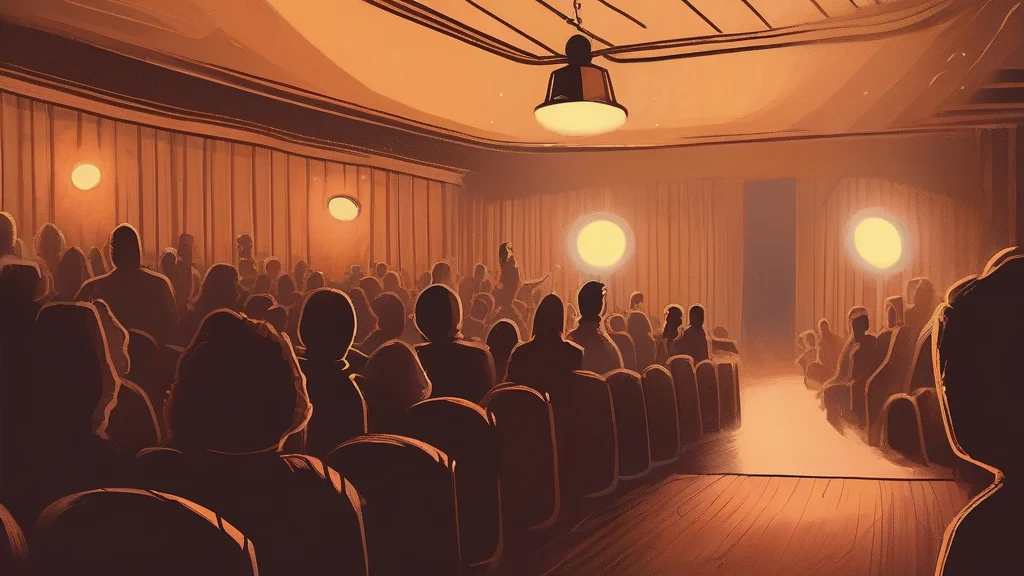
Toward or at the rear of a stage, away from the audience.
"The singer walked upstage as the lights dimmed."
Chiefly used in theatrical and performance contexts.
Relating to or situated toward the rear of a stage.
"The scenery was stacked in the upstage area."
Chiefly used in theatrical and performance contexts.
The rear part of a stage, farthest from the audience.
"The musicians waited at the back of the upstage."
Rare in general use and more common in specialized theatrical language.
Rare and usually unnecessary; when referring to the rear area of a stage, speakers often use the noun attributively, as in “upstage area.”
"The entrances at the far upstages were hidden by the curtains."
Born as a theater instruction to move away from the audience's gaze, upstage became a social metaphor for making someone disappear from the spotlight.
Reviewed by Deb Chak, Editor. AI-assisted content curated by RJS Tech Solutions LLP.
Where does upstage come from?
Upstage is an early 19th-century compound of up and stage, developed first as a theatrical term indicating a position toward the rear of the stage. Stage comes through Old French estage from Latin stare, “to stand,” while the other component belongs to the familiar Germanic word up. The figurative sense developed from theatrical rivalry and came to mean drawing attention away from someone or placing someone in a less prominent position.
Related word forms
How upstage is actually used
The figurative verb is informal and often implies that someone is deliberately redirecting attention or undermining another person's prominence. The spatial adjective and adverb are most common in theatrical and stage-direction contexts.
Easily confused with upstage
Onstage means on the stage, whereas upstage means toward its rear or, figuratively, toward a less prominent position.