
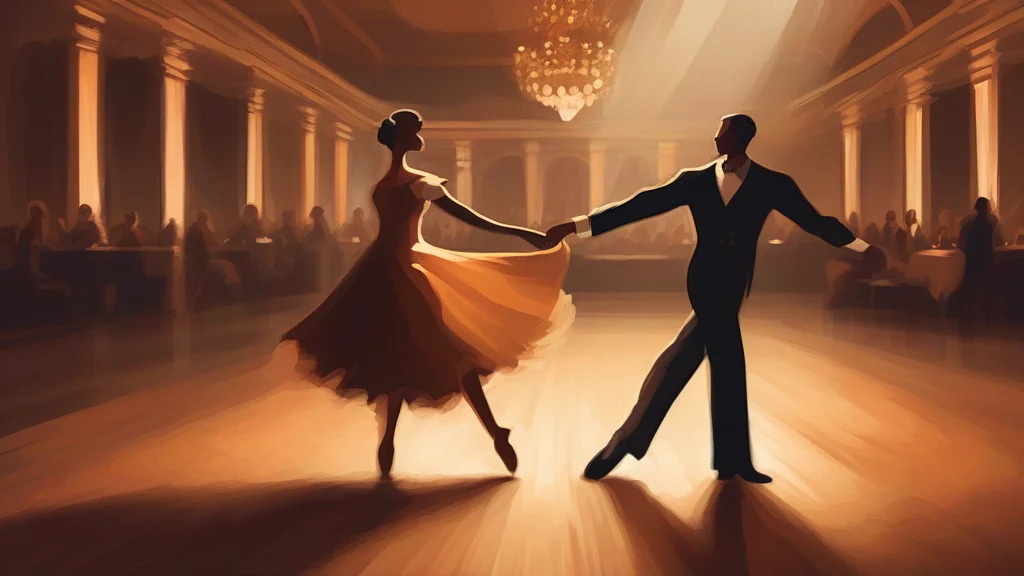
What does valse mean?
Valse is a noun and verb associated with a graceful ballroom dance in triple time. As a noun, it denotes a dance in which couples turn and move around the floor, often in a smooth, flowing pattern; as a verb, it means to perform such a dance. The word is especially associated with British, Continental European, and ballroom or ballet contexts, where it has a more traditional or international character than the everyday English alternative. A valse is closely connected with the waltz tradition, particularly the Viennese style, although the two terms are not always interchangeable in English. Valse also has a pleasing linguistic history: it entered English from French and ultimately derives from German, reflecting the turning or rolling movement central to the dance. The word is useful to writers seeking a precise or atmospheric alternative to waltz, especially when describing European settings, formal dancing, or ballet.
A ballroom dance in triple time, usually performed by a couple turning in a circle; a slow or Viennese-style waltz.
"The opening of the piece is a waltz-like valse for strings and piano."
Often used in a traditional, literary, Continental European, or dance-related register.
To dance a valse.
"They valsed around the room to the strains of an orchestra."
Most common in literary descriptions of formal dancing and in accounts of ballet.
The plural valses is used for multiple dances or for multiple musical compositions in the dance form.
"The concert included three valses by Johann Strauss."
Valse entered English through French, but its beating heart is German: the word ultimately evokes rolling and turning, the defining motion of the dance.
Reviewed by Deb Chak, Editor. AI-assisted content curated by RJS Tech Solutions LLP.
Etymology of valse
The English noun and verb were borrowed from French valse in the early nineteenth century. French valse in turn came from German Walzen, meaning “to roll” or “turn,” which is also the source of the English waltz. The Germanic sense reflects the continuous turning movement that characterizes the dance.
Related word forms
How valse is actually used
In British English, the noun is relatively literary, traditional, or Continental in tone, while North American usage is much less frequent. As a verb, it is especially associated with literary or historical descriptions of ballroom dancing and ballet.
Easily confused with valse
A waltz is the usual English name for the family of dances in triple time, whereas a valse more specifically denotes a slow, turning dance and is often the Continental or formal label.