What does vaudeville mean?
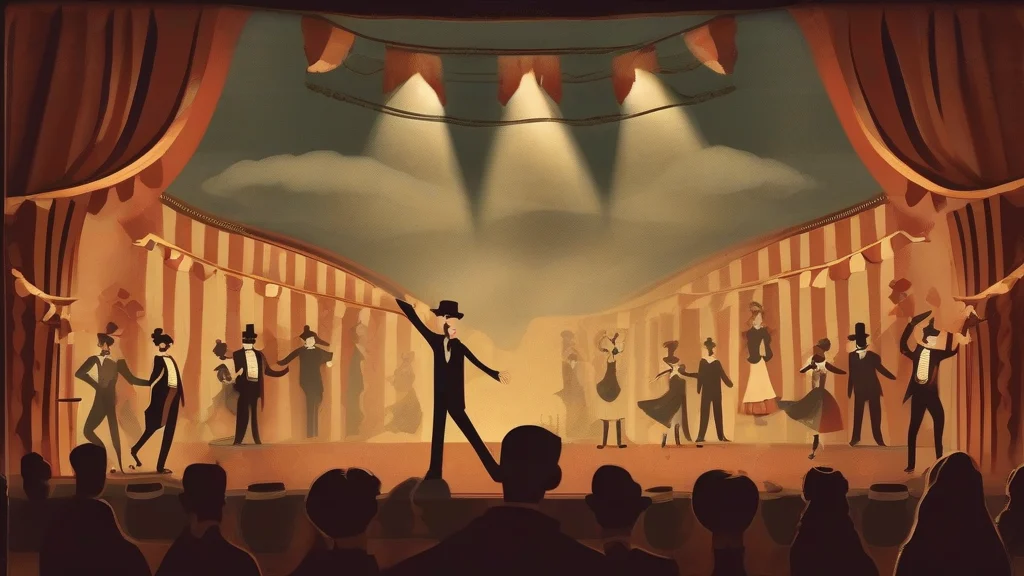
Vaudeville refers to a type of entertainment that was popular in the late 19th and early 20th centuries. Characterized by a variety of acts including music, dance, comedy, and acrobatics, vaudeville shows were a staple of American entertainment history. The term often evokes a sense of nostalgia for a bygone era of live performance. Vaudeville was a significant platform for many performers, providing a space for them to develop their talents and launch their careers. The genre's influence can still be seen in modern variety shows and revues. Vaudeville's popularity waned with the rise of film and television, but its legacy continues to be celebrated.
nounA type of entertainment popular in the late 19th and early 20th centuries, characterized by a variety of acts including music, dance, comedy, and acrobatics. Vaudeville was a significant part of American entertainment history.
- A type of entertainment
- A specific type of theatrical performance
"The vaudeville show featured a mix of comedy, music, and dance acts that entertained the audience."
"The vaudeville show featured a mix of comedy, music, and dance acts that entertained the audience."
"Vaudeville was a stepping stone for many famous performers, including Charlie Chaplin and the Marx Brothers."
The plural form is used when referring to multiple vaudeville shows or performances.
"The theater hosted several vaudevilles throughout the season, each featuring a unique lineup of acts."
Reviewed by Deb Chak, Editor. AI-assisted content curated by RJS Tech Solutions LLP.
Etymology of vaudeville
The term 'vaudeville' is derived from the French phrase 'vau de Vire,' which refers to a valley in Normandy known for its folk songs. The term evolved to describe a type of entertainment that originated in France and later became popular in the United States. The word 'vaudeville' has been in use since the 18th century.
How vaudeville is actually used
Vaudeville is often associated with a bygone era of entertainment and is sometimes used nostalgically or ironically.