
What does vetturino mean?
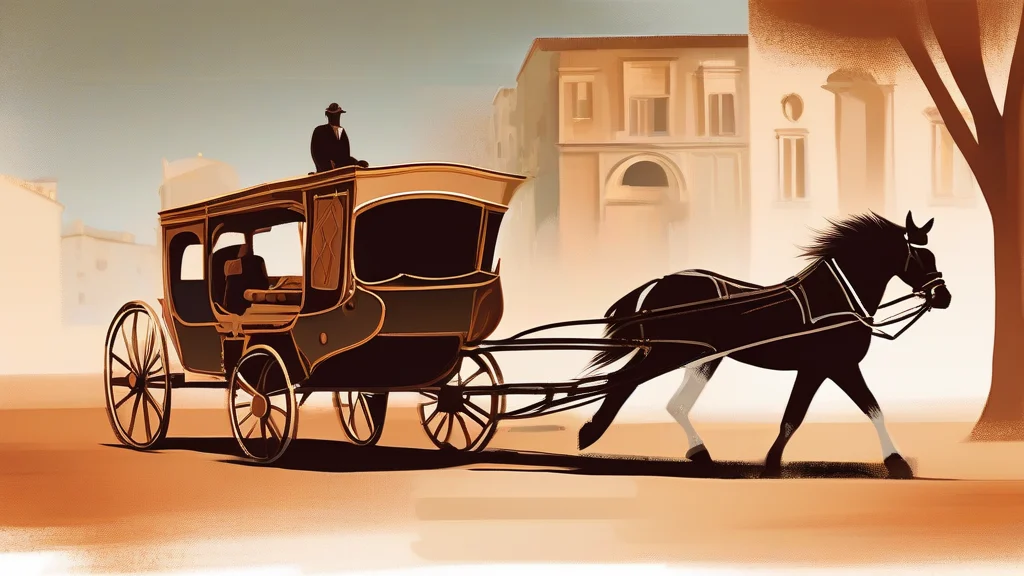
A vetturino was a driver of a carriage, especially a hired or public carriage. The term belongs to the vocabulary of horse-drawn transport and is chiefly encountered in historical or literary contexts rather than modern conversation. In use, it denoted the person responsible for driving the vehicle and managing its horses, a role comparable to that of a coachman. The word also reflects the influence of Italian on English during the period when Italian carriage terminology was adopted. Today, understanding vetturino adds specificity to older accounts of travel and transport, but in ordinary speech a coachman or driver would usually be clearer and more familiar.
nounA vetturino is an obsolete term for a coachman or carriage driver.
- A coachman or carriage driver.
"The vetturino guided the carriage through the crowded streets."
"The vetturino climbed down to adjust a horse's harness."
"She spoke with the vetturino before boarding the carriage."
The plural is formed by adding -i to the Italian-style singular ending.
"Several vetturini waited outside the hotel."
Before the motorcar, the vetturino was the person who kept the carriage moving.
Reviewed by Deb Chak, Editor. AI-assisted content curated by RJS Tech Solutions LLP.
Etymology of vetturino
The word comes from Italian vetturino, meaning a coachman or carriage driver. Its roots lie in Italian vettura, a carriage or vehicle, which derives from Latin vectura, a carrying or transport. The related English words carriage and vehicle belong to the same Latin etymological family.
How vetturino is actually used
The word is now chiefly literary or historical and is rarely encountered in contemporary English.
Easily confused with vetturino
A vetturino was a carriage driver, whereas a veterinarian treats animals.