
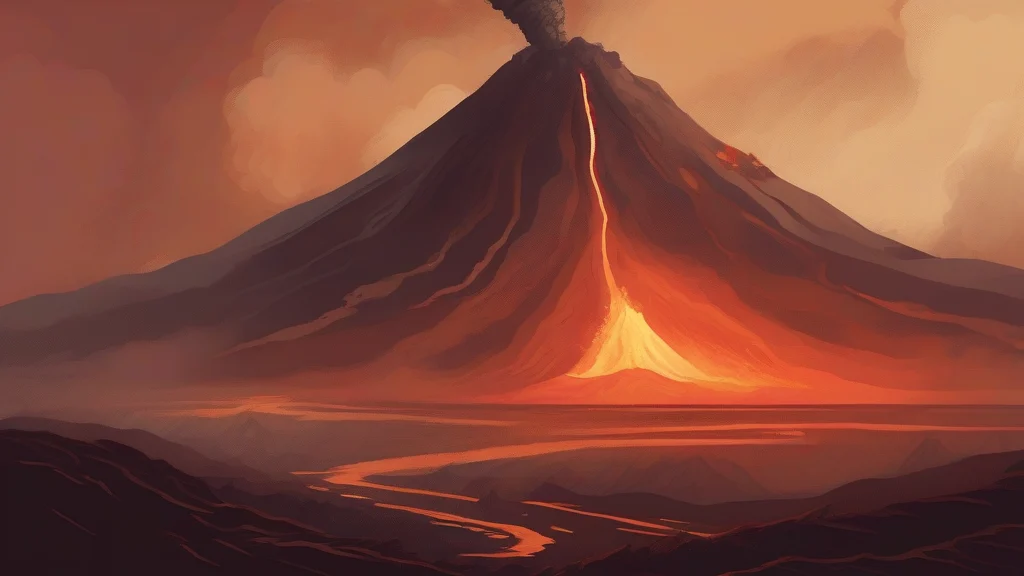
What does volcanic mean?
Volcanic is an adjective describing anything connected with a volcano or with the processes that produce volcanic landforms and materials. It is especially common in established combinations such as volcanic activity, volcanic eruption, volcanic rock, and volcanic ash. The word can refer both to the activity itself, including eruptions and flows of lava, and to materials or landscapes formed by magma, gas, ash, and other volcanic products. In figurative use, “volcanic” may describe an argument, emotion, or event as explosive, intense, or difficult to control, although this sense is less frequent than the geological one. The word is used in standard English in both British and American contexts, with no major regional difference in meaning. Its close association with dramatic eruptions and spectacular landscapes makes it especially effective in descriptions of geology, travel, geography, and environmental science.
adjectiveRelating to, caused by, or involving a volcano or volcanic activity. It can also describe rock, ash, soil, or other material formed through volcanic processes.
- Relating to or involving a volcano, volcanic eruptions, or volcanic activity.
- Formed, produced, or deposited by volcanic processes.
"The island's black volcanic cliffs overlook a deep blue sea."
"Scientists monitored the volcanic activity through the night."
"The valley is covered in fertile volcanic soil."
The word “volcanic” ultimately points toward fire and ancient mythology: volcano comes through Italian from Vulcano, an island named for the Roman god of fire, Vulcan.
Reviewed by Deb Chak, Editor. AI-assisted content curated by RJS Tech Solutions LLP.
Where does volcanic come from?
The adjective is derived from “volcano,” with the connecting form appearing in related English words such as volcanism and volcanology. “Volcano” comes through Italian vulcano, ultimately from Latin Volcanus, a name associated with the Roman god of fire, Vulcan. The geographical name refers to the island of Vulcano, whose eruptions were well known in the classical and early modern period. The English adjective developed in the early 17th century as a scientific term for phenomena and materials connected with volcanoes.
Related word forms
How volcanic is actually used
Volcanic is normally used attributively, before a noun, as in “volcanic activity” or “volcanic rock.” It can also be used figuratively for an explosive or highly charged situation, but the literal geological sense is the most common.
Easily confused with volcanic
Volcano is a noun for the geological feature or mountain through which magma, gas, and ash can erupt, whereas volcanic is the adjective describing it or its activity.