
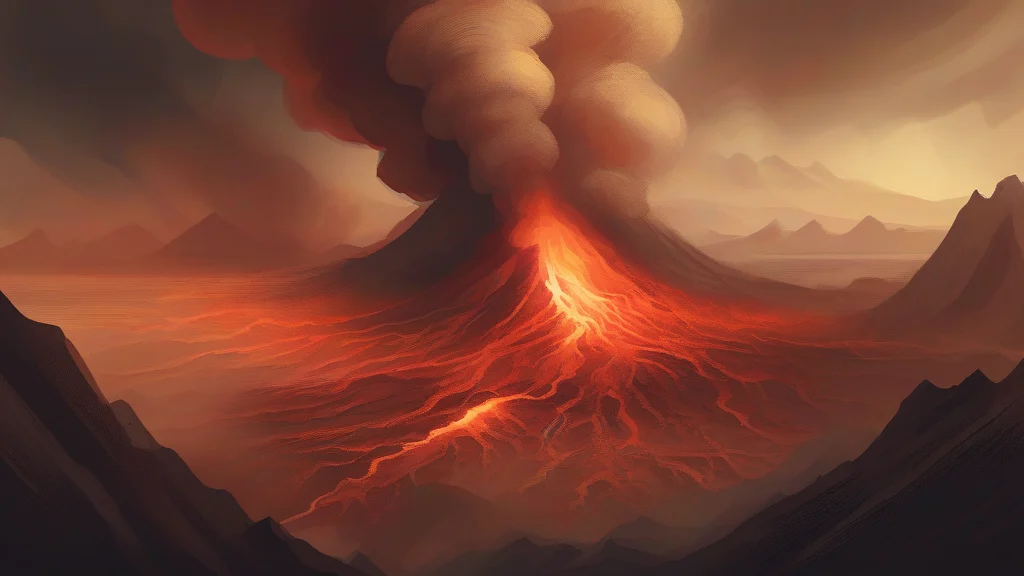
What does volcanism mean?
Volcanism names the geological activity associated with volcanoes, including the movement of magma through the Earth's crust, the release of gases and lava, and the formation of volcanic rock. The word is especially common in geology, volcanology, seismology, and discussions of regions such as the Pacific Ring of Fire. It can refer to the process generally or to volcanic activity in a particular area, as in “the volcanism of Iceland.” Unlike “volcano,” which names a specific landform or vent, “volcanism” emphasizes an ongoing system of processes. The term is formal and technical, but it is also used in general reporting and environmental discussion when describing eruptions, volcanic hazards, and their effects on landscapes. In this sense, volcanism is a mass noun: it is usually not counted with a or plural numbers, although the plural “volcanisms” is grammatically possible in specialized contexts.
nounVolcanism is the geological process and activity involving magma, volcanic eruptions, and the movement of molten or hot material within and beneath the Earth's crust. It may refer to volcanism in a particular region or to the phenomenon as a whole.
- The phenomenon or process of volcanic activity, including eruptions and the movement of magma beneath the Earth's surface.
"The region is known for its active volcanism, which has shaped the surrounding landscape over millions of years."
"Scientists used seismic data to investigate the volcanism beneath the island."
"A report described widespread volcanism along the Pacific Ring of Fire."
The plural is grammatically possible but uncommon; “volcanism” is normally used as an uncountable noun.
"The study compares volcanisms in different tectonic settings."
Volcanism helps build and recycle Earth's crust, turning underground magma into new land while returning older rock to the planet's interior.
Reviewed by Deb Chak, Editor. AI-assisted content curated by RJS Tech Solutions LLP.
Where does volcanism come from?
“Volcanism” comes from the French “volcanisme,” formed from “volcan,” a word ultimately derived from Latin “Volcanus,” the Roman god associated with fire and metalworking. The English term entered scientific usage in the early nineteenth century as the study and description of volcanic processes developed. Its relatives include “volcano,” “volcanic,” “volcanology,” and “volcanologist,” all belonging to the same Latin-rooted family.
How volcanism is actually used
Volcanism is a formal and primarily scientific term. It is normally used as an uncountable mass noun and describes volcanic activity as a process rather than a single eruption.
Easily confused with volcanism
A volcano is a geological feature or vent through which volcanic material may erupt, whereas volcanism is the broader process of volcanic activity.