
What does vulture mean?
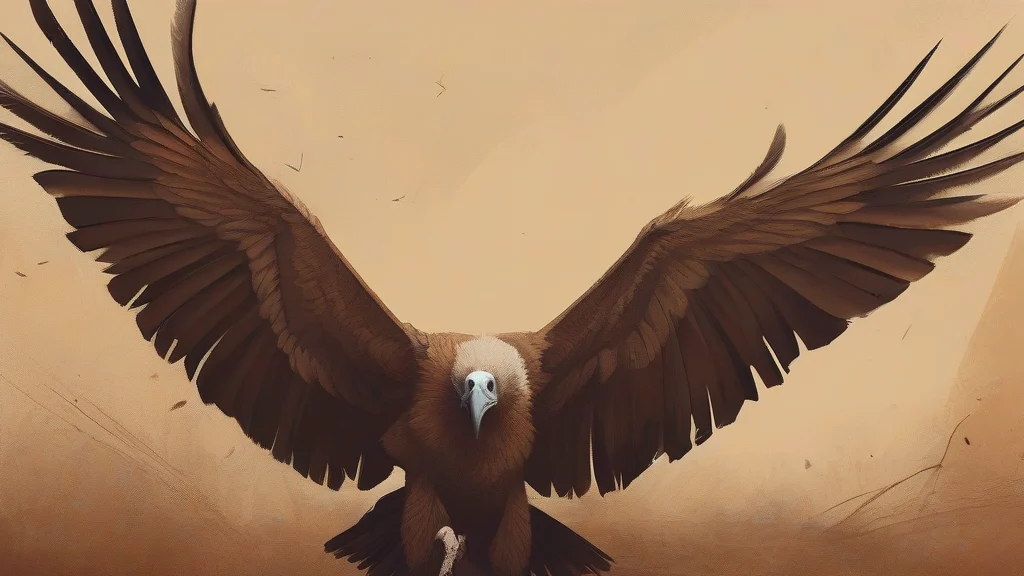
Vulture most commonly denotes a large bird of prey that feeds on carrion, the remains of dead animals. Its distinctive hooked bill, broad wings, and bald head make it one of the most recognizable birds in the landscape. The word also has a strongly negative figurative use for a person who exploits the vulnerable, profits from another person's misfortune, or waits for an opportunity to take advantage of others. In financial and political contexts, “vulture” can describe speculators or organizations that move in during a crisis, such as investors purchasing distressed assets. As a verb, “to vulture” means to prey on or exploit someone in a vulnerable position. This usage is informal and generally condemns the behavior it describes. Together, the literal and figurative senses make vulture a memorable example of how a specific animal can become a powerful symbol of predation, opportunism, and moral repulsion.
A large bird of prey that feeds primarily on carrion; figuratively, a person who exploits the vulnerable or profits from others' misfortune.
"The ruined castle was soon surrounded by vultures waiting to see what they could claim."
To prey on or exploit someone, especially someone who is vulnerable or distressed.
"Several companies vulture on small businesses that have been overwhelmed by rising costs."
The standard plural is vultures, retaining the final -e.
"The vultures descended on the abandoned carcass."
The vulture's image is so closely tied to opportunism that calling someone a vulture is both an insult and a quick sketch of their character.
Reviewed by Deb Chak, Editor. AI-assisted content curated by RJS Tech Solutions LLP.
Where does vulture come from?
The English word comes through Old French vautour from Latin vultur, whose accusative form was vulturem. The word was established in English during the medieval period and initially referred to the bird. French vautour, Spanish buitre, and Portuguese abutre reflect the same Latin source. The figurative sense of a predatory or opportunistic person developed from the bird's reputation for feeding on the remains of what others have killed.
Related word forms
How vulture is actually used
The noun is neutral when referring literally to the bird, but figurative uses are strongly derogatory and suggest cruelty, greed, or shameless opportunism. The verb is informal and is chiefly used in figurative contexts.