
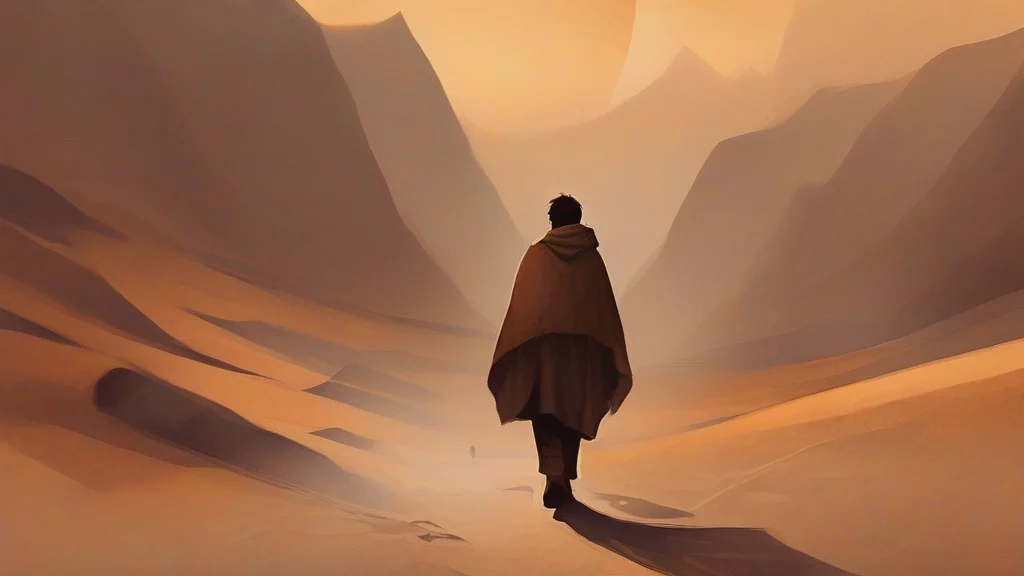
What does wanderer mean?
A wanderer is someone who travels from place to place, usually without a fixed home or settled destination. The word frequently conveys solitary movement and may suggest freedom, restlessness, aimlessness, or exile. In everyday use, it can describe an ordinary traveller, though it often has a literary or romantic tone that makes the person seem independent and somewhat mysterious. A wanderer may be a pilgrim, migrant, itinerant worker, traveller, or simply someone whose life is shaped by continual movement. The expression is also common in stories, poems, legends, and songs, where a lone figure crossing unfamiliar territory can symbolize isolation from society or the search for belonging. Because “wanderer” can carry both adventurous and melancholy associations, its precise implications depend on context: it may evoke an independent traveller with a sense of possibility or a rootless person marked by hardship and loss.
nounA person who travels from place to place, typically without a fixed destination or settled home. The word often suggests a solitary, aimless, or wandering figure.
- A person who travels from place to place, especially without a fixed home or destination.
"The old wanderer returned to the village after years on the road."
"A solitary wanderer followed the coastal path until dusk."
"The novel portrays its narrator as a restless wanderer through the city."
"No wanderer was found at the abandoned camp."
The standard plural form, used when referring to more than one person who travels without a fixed home or destination.
"The two wanderers met on the road and shared their food."
In the Old English poem The Wanderer, a solitary exile turns wandering into a powerful image of loneliness, memory, and the passage of time.
Reviewed by Deb Chak, Editor. AI-assisted content curated by RJS Tech Solutions LLP.
Etymology of wanderer
The noun was formed in Middle English by adding the agent suffix -er to wander. Wander continues Old English wandrian, meaning “to wander,” and belongs to a Germanic word family with cognates such as German Wanderer and Dutch wandelaar. Its prominent literary associations were reinforced by the Old English poem The Wanderer, in which a solitary exile reflects on loss, loneliness, and the passage of time.
How wanderer is actually used
The word is common in literature and poetic description and may carry romantic or free-spirited associations. In more neutral contexts, it emphasizes movement without a settled home or definite destination.