
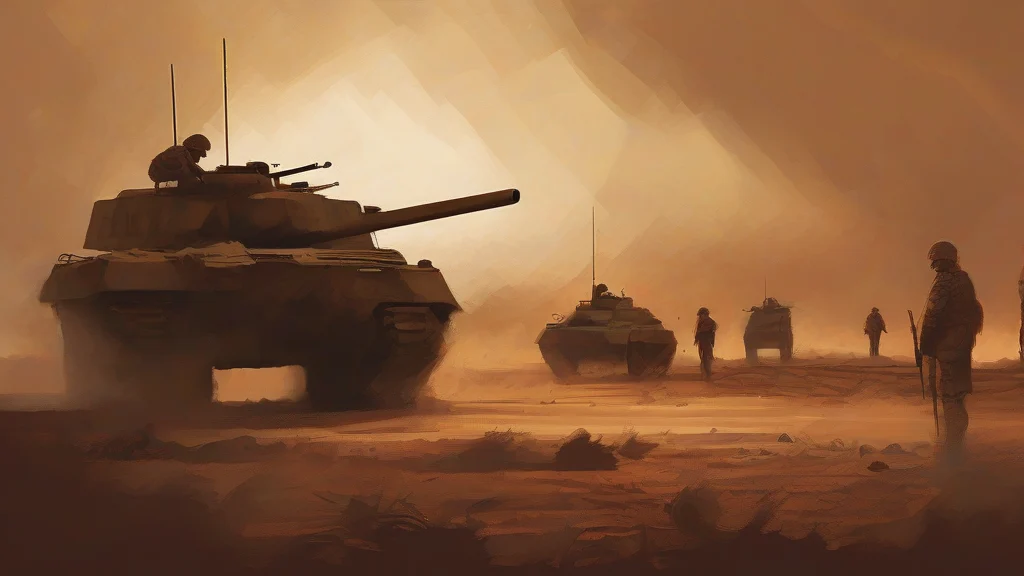
What does war mean?
War is a word for organized armed conflict, especially a conflict between states, communities, or other politically or militarily organized groups. It can also describe a prolonged state of hostility, struggle, or violent disorder. In contemporary English, war usually suggests more than an isolated fight: it implies sustained violence, organized forces, and consequences that may affect civilians, institutions, borders, and political systems. Because of this, the word carries serious emotional and historical weight. Used figuratively, war can refer to intense rivalry, as in economic or ideological struggles, although such expressions are more rhetorical than literal. The related forms warfare, warrior, warlike, and warlord extend the word’s military associations. War can function as both a noun, naming a conflict or state of hostility, and a verb, meaning to engage in armed struggle. Its simple plural, wars, is used when referring to distinct conflicts, while the present participle warring and past tense warred describe parties engaged in conflict. Understanding war therefore requires distinguishing both its literal military meaning and its broader metaphorical uses.
War is organized armed conflict between states or other organized groups, or a broader state of sustained hostility and violent struggle.
"Civil war devastated the region for several years."
As a countable noun, war names an individual conflict or period of fighting. In figurative use, it often intensifies the idea of a difficult struggle.
To engage in warfare or armed conflict; to fight against another party.
"The two factions warred over the disputed territory."
The verb is less common than the noun and is most often used in historical or literary contexts.
The regular plural is wars, used for separate conflicts or periods of warfare.
"The wars of the century transformed many political borders."
Every major war leaves traces in borders, law, memory, and the language people use to describe everyday struggle.
Reviewed by Deb Chak, Editor. AI-assisted content curated by RJS Tech Solutions LLP.
Etymology of war
The word descends from Old English werre, meaning hostility, strife, or armed conflict, and ultimately from a Germanic root associated with war. Related forms appeared in other Germanic languages, including Old Saxon werr and Old Norse orr. English later developed warfare, warrior, warlike, and warlord through the same wider word family, while the basic noun and verb forms continued into modern usage.
Related word forms
How war is actually used
War is strongly formal in its primary sense and generally implies organized or sustained conflict rather than a single isolated act of violence. In figurative uses, it can describe intense competition or political struggle, but those expressions may sound rhetorical or dramatic. The pronunciation is rhotic in American English and non-rhotic in most British English.
Easily confused with war
War means armed conflict or a state of hostility, whereas a ward is a person or place under protection.
War is a conflict involving organized violence, while ware refers to goods or merchandise.