
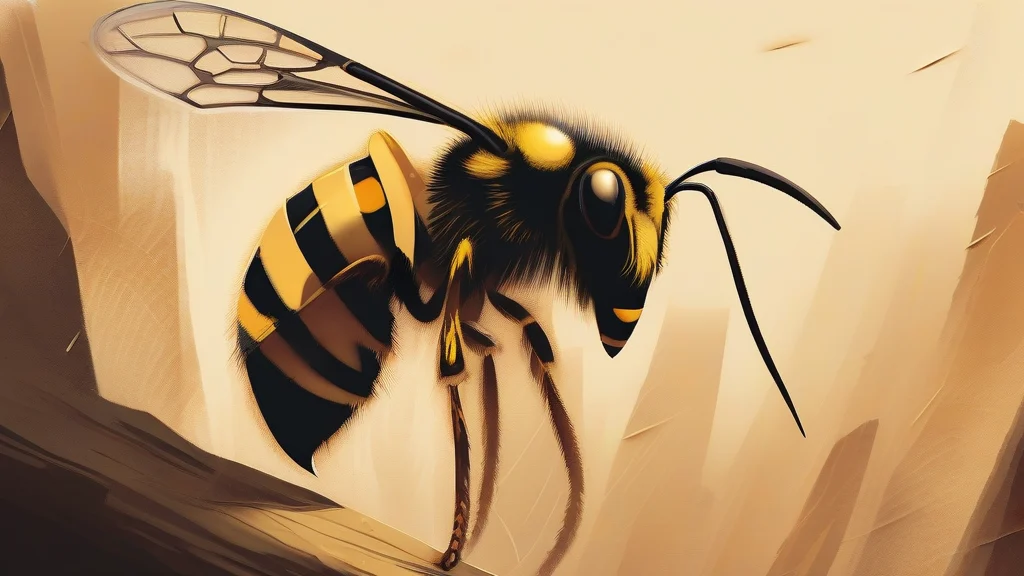
What does wasplike mean?
Wasplike is an English adjective meaning “resembling a wasp.” It can describe a person, body, object, marking, or movement whose slender shape, sharp outline, or coloration recalls a wasp. The word is often applied to a narrow waist or similarly tapered form, though it also fits objects and creatures with wasp-like proportions. Unlike “waspish,” which usually means irritable, cross, or spiteful, “wasplike” focuses on physical resemblance rather than temperament. It is relatively uncommon compared with the more familiar hyphenated “wasp-like” and is most natural in vivid descriptive prose. In formal or analytical writing, a more specific term may be preferable. The word is transparent: it joins “wasp” with the productive suffix “-like,” meaning “resembling” or “similar to.” Because it follows standard English compound formation, it is readily understood even when encountered for the first time. Its usefulness lies in evoking the wasp’s distinctive slim silhouette without importing the sharper emotional connotation of “waspish.”
adjectiveResembling a wasp in appearance, shape, or form, especially in having a slender, sharply defined build.
- Resembling a wasp in appearance or form.
"The dancer's narrow, wasplike figure seemed to sharpen the severity of the costume."
"Her slender, wasplike waist contrasted with the elaborate drapery of the gown."
"The beetle's dark body and pale markings gave it a wasplike appearance."
A wasplike waist is all silhouette; a waspish mood is all attitude.
Reviewed by Deb Chak, Editor. AI-assisted content curated by RJS Tech Solutions LLP.
Etymology of wasplike
Wasplike is an English compound formed from “wasp” and the suffix “-like,” meaning “resembling” or “similar to.” It developed through ordinary compound-adjective formation, while related forms such as “waspy,” “waspiness,” and “waspily” were derived from the same noun through productive suffixes.
How wasplike is actually used
A relatively uncommon descriptive term, especially natural in vivid prose. In formal or highly technical contexts, a more specific anatomical or taxonomic term may be preferable.
Easily confused with wasplike
Wasplike describes resemblance to a wasp, whereas waspish usually describes an irritable, cross, or spiteful person.