
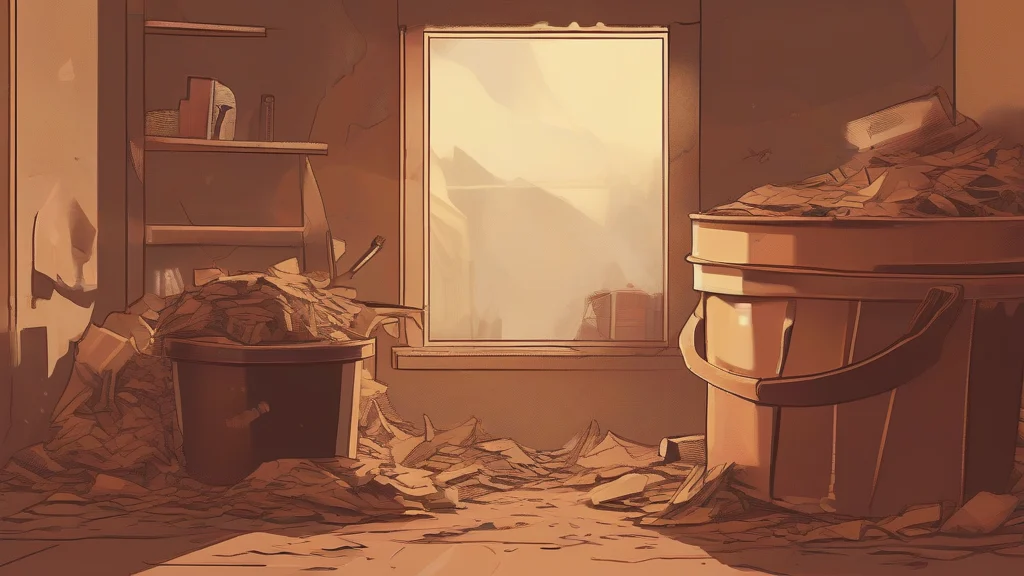
What does wast mean?
Wast is an archaic and literary English word that survives chiefly in older prose and verse. As a noun, it denotes an expanse of barren, ruined, or desolate land, and by extension devastation or waste. As an adjective, it describes land or a place that has been laid waste. As a verb, it means to waste or squander, though this use is especially dated. The standard modern form is waste; wast is valued when a more severe, compressed, or poetic register is wanted. In phrases such as a barren wast, the word evokes both physical desolation and, by extension, moral or social ruin. Its long history links it to the Old English wāste, an old word for uncultivated land. Although it is not the usual contemporary choice, understanding wast helps readers interpret poetry, historical texts, and deliberately archaic prose.
An expanse of barren, desolate, or ruined land; also, more generally, ruin, devastation, or waste.
"From the hill, the observers saw a barren wast stretching to the horizon."
Chiefly literary or archaic; the usual modern word is waste.
To waste, squander, or consume carelessly.
"They would not wast the evening on an argument they could not settle."
Archaic or dated in modern English.
Desolate, barren, or ruined; laid waste.
"The war left the countryside a wast."
Chiefly literary; often used predicatively to describe a place transformed by abandonment or devastation.
Rare and chiefly found in literary or archaic contexts.
"The poem imagines a world reduced to wasts of ash."
A wast is not merely neglected land—it is land emptied of life.
Reviewed by Deb Chak, Editor. AI-assisted content curated by RJS Tech Solutions LLP.
Where does wast come from?
Wast comes through Middle English from Old English wāste, meaning waste land, desert, or uncultivated territory. It belongs to a Germanic family that includes German Wüste and Dutch woestijn, words likewise denoting desolate or uncultivated land. The modern form waste became standard, while wast survived in archaic, dialectal, and poetic usage.
Related word forms
How wast is actually used
Wast is chiefly archaic, poetic, or deliberately old-fashioned. The modern standard form is waste, although wast remains especially evocative in descriptions of desolate places.
Easily confused with wast
Waste is the standard modern noun and verb, whereas wast is an archaic and poetic form retained chiefly for a severe or deliberately old-fashioned effect.
Vast means extremely large, while wast means barren, desolate, or ruined.