
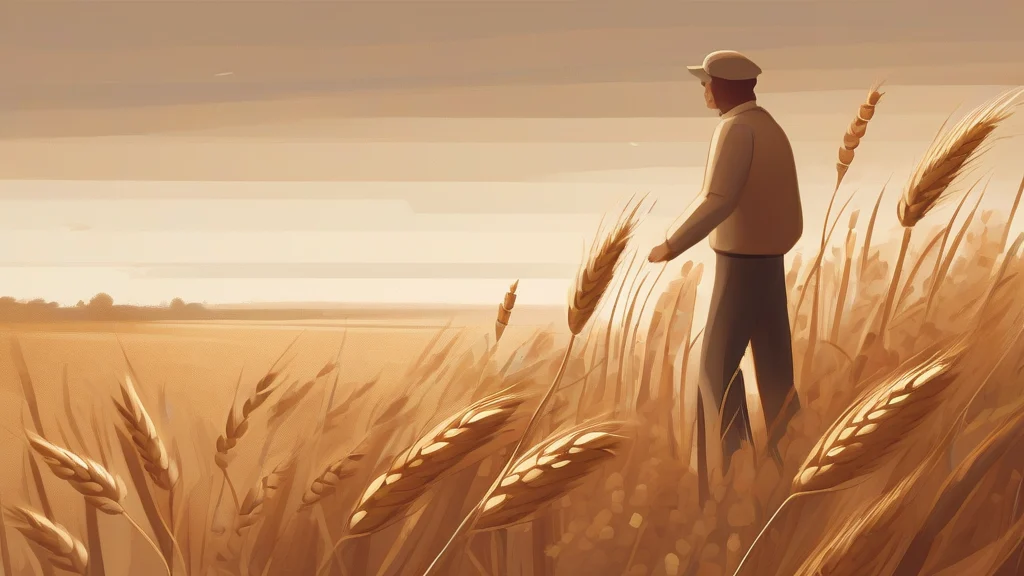
What does wholegrain mean?
Wholegrain describes food made from the complete grain kernel, including the outer bran, the germ, and the starchy endosperm. The term is especially common for bread, flour, cereal, pasta, and other products that have not been refined in a way that removes important parts of the grain. In British English, wholemeal is a familiar alternative, especially in relation to wheat; wholegrain is more broadly used and can refer to oats, rice, barley, and other grains. The word is associated with everyday nutrition and with a preference for foods that retain more naturally occurring fiber and micronutrients. As an adjective, wholegrain normally appears before a noun, as in wholegrain bread. As a noun, it is generally an uncountable mass term for whole-grain food or grain, although the plural wholegrains can occasionally be used for separate grains or distinct products.
Made from or containing whole grain kernels, with the bran, germ, and endosperm retained.
"We switched to wholegrain pasta to make our dinners a little healthier."
Usually used attributively before a food noun; whole-grain is also an accepted spelling.
Whole-grain food, or grain used in its unrefined, whole-kernel form.
"The shop stocks oats, brown rice, and other wholegrain."
Normally uncountable; wholegrains is uncommon and can refer to separate grains or distinct whole-grain products.
Normally an uncountable mass noun, with no regular plural. The plural wholegrains is uncommon and may be used for separate grains or distinct products.
"The cupboard was stocked with wholegrain, pasta, and dried beans."
The bran and germ are where much of a grain's fiber and micronutrients live, so wholegrain preserves more than just the grain's flavor.
Reviewed by Deb Chak, Editor. AI-assisted content curated by RJS Tech Solutions LLP.
Etymology of wholegrain
Wholegrain is an English compound formed from whole and grain, developed in modern English to emphasize the use of the grain kernel without removing its component parts. Grain itself comes through Old French from Latin granum, the word for a seed or cereal grain. The same Latin root is reflected in related English words such as granary, granule, and granular.
Related word forms
How wholegrain is actually used
As an adjective, wholegrain is usually used attributively, as in "wholegrain bread" or "wholegrain flour." Wholemeal is more common in British English, while wholegrain and the hyphenated form whole-grain are both established in American English. The noun is normally uncountable, though wholegrains is occasionally used for separate grains or distinct grain products.
Easily confused with wholegrain
Wholemeal is chiefly British and normally refers to flour or foods made from whole wheat, whereas wholegrain can describe products made from any whole grain, including oats, rice, and barley.
Multigrain means that a product contains several different grains, not that the grains used are necessarily unprocessed or whole.