
What does wiredrawing mean?
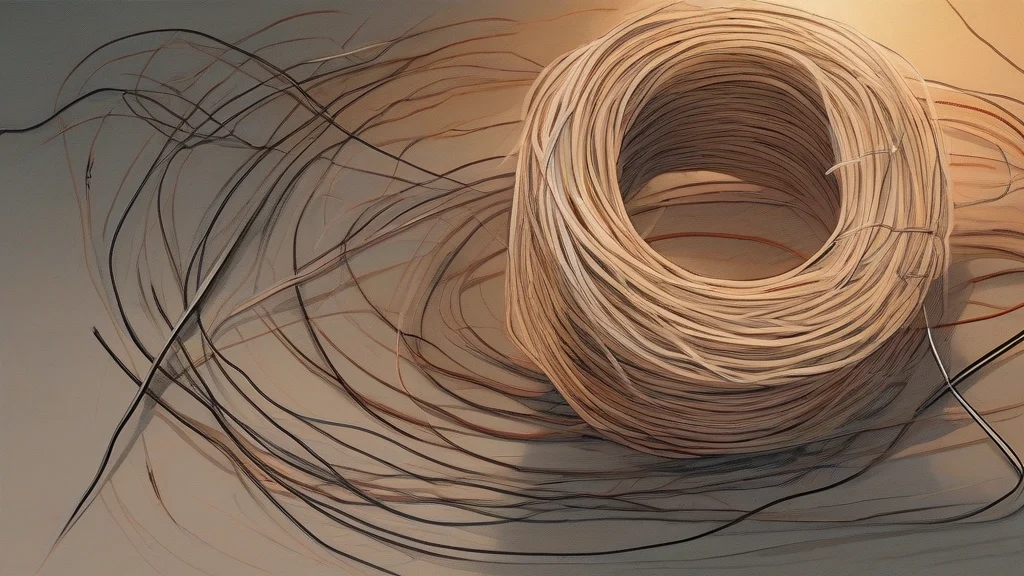
Wiredrawing is a specialist metalworking term for reducing a metal rod or wire by pulling it through a die or a sequence of dies. Each pass leaves the material at a smaller and more uniform diameter, allowing manufacturers to produce fine, precisely dimensioned wire with a controlled surface finish. The process also depends on managing tension, lubrication, tool geometry, and the metal's ductility; excessive force can break the strand, while inadequate control produces inaccurate or damaged wire. Although wiredrawing can refer broadly to the art or industry of wire making, its modern technical sense is especially associated with drawing operations in manufacturing. It should not be confused with electrical wiring, which concerns installing or connecting conductors, or with a diagram of a circuit. The word is uncommon in general speech but recognizable to readers interested in metallurgy, manufacturing, craft history, or traditional wire-working techniques. Its interest lies in the contrast between powerful pulling and extremely fine control, since wire can be produced with remarkable dimensional accuracy.
nounThe metalworking process of pulling a metal rod or wire through a die, often through a succession of dies, to reduce its diameter and produce a fine, accurately sized strand. By extension, it refers to the craft, technique, or industry of making wire in this way.
- The process of pulling metal through a die or successive dies to reduce its cross-section and produce wire of a smaller, more uniform diameter.
"The manufacturer uses precision wiredrawing to produce fine copper strands for electrical components."
"Precision wiredrawing requires careful control of tension, lubrication, and the shape of the die."
"The museum's demonstration shows how artisans used a drawbench for fine wiredrawing."
The noun is normally used as a mass noun for the process or craft, so the plural is uncommon.
"The catalogue compares wiredrawings of copper, brass, and steel wire."
Wiredrawing can make wire finer than a human hair—a miniature contest of pulling force, tension, and precision.
Reviewed by Deb Chak, Editor. AI-assisted content curated by RJS Tech Solutions LLP.
Etymology of wiredrawing
Wiredrawing is an English compound formed from wire and drawing. Wire continues Old English wīr, meaning wire, thread, or metal strand, while draw comes from Old English dragan, meaning to pull or drag. In this compound, drawing denotes the action of pulling material through a die, and the word names both the operation and the associated craft or industry.
How wiredrawing is actually used
Chiefly a technical and formal noun in metallurgy and manufacturing. It is uncommon in general speech and should not be used as a synonym for electrical wiring or a wiring diagram. The compound is normally written closed, although the hyphenated form wire-drawing is common in technical modifiers.
Easily confused with wiredrawing
Wiring concerns arranging or connecting electrical conductors, whereas wiredrawing is the industrial process of reducing metal to a thinner, precisely formed strand.