
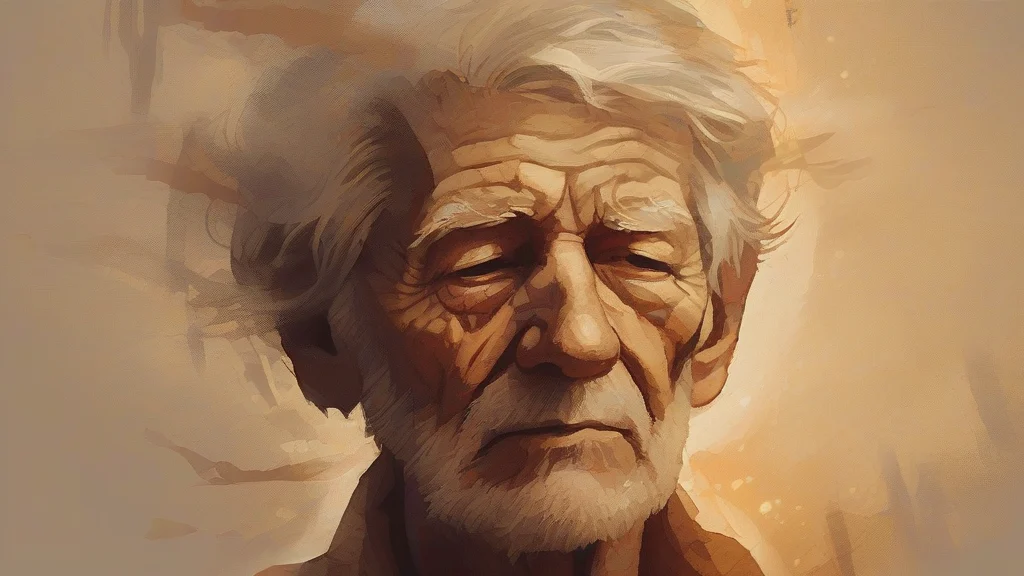
What does wizened mean?
Wizened is a literary adjective describing something that has become dry, shriveled, and seemingly reduced through age or exposure. It is commonly used of faces, features, hands, and skin: a wizened face may suggest advanced age, harsh weather, or a life of hardship. The word carries a vivid, sometimes unsympathetic physical implication, so describing a person outright can sound blunt or disrespectful. Unlike “aged,” which merely states the passage of time, “wizened” emphasizes the visible texture and contraction associated with it. Although its appearance is occasionally comic, the term can also be dignified in literary and historical descriptions. Wizened is pronounced /ˈwɪzənd/ and functions chiefly as an adjective in modern English. It is especially useful when an author wants to convey not merely age but the leathery, sunken, dried-out appearance that age or exposure can produce.
adjectiveShriveled or dried up, especially as a result of age; looking old and withered.
- Shriveled, dried up, or reduced in appearance, especially through age or exposure.
"Her wizened hands folded gently around the warm cup."
"Her wizened hands folded gently around the warm cup."
"The wind-weathered farmer emerged with a wizened face and a slow, careful step."
A wizened face is not merely an old face—it is one that appears dried and shrunken by time.
Reviewed by Deb Chak, Editor. AI-assisted content curated by RJS Tech Solutions LLP.
Where does wizened come from?
Wizened derives from the now-obsolete English verb wizen, meaning “to dry up, wither, or shrivel,” which continued from an Old English form through Middle English. The verb was Germanic in origin and had relatives in other early Germanic languages. Adding the participial ending -ed produced the familiar adjective, with its characteristic sense of something shrunken or withered by age.
How wizened is actually used
Chiefly literary and descriptive. It is commonly applied to faces, features, hands, and skin. Applied directly to a person, it can sound harsh or disrespectful because it vividly emphasizes age and physical deterioration.
Easily confused with wizened
Wizened emphasizes a dry, shrunken, aged appearance, whereas withered more broadly means wilted, dried, or deprived of vitality.