
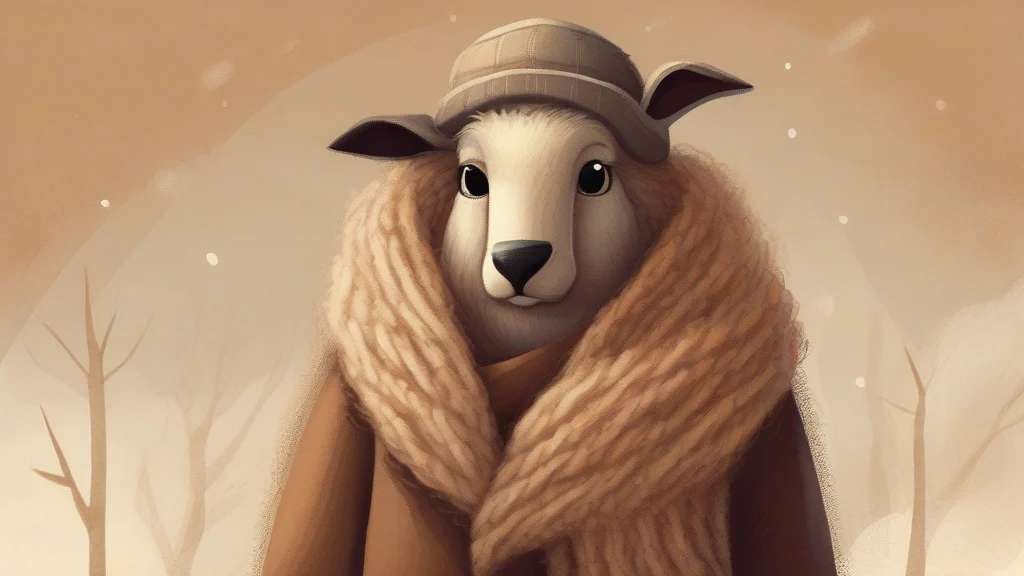
What does woolier mean?
“Woolier” is the comparative form of “woolly” or “wooly,” an adjective describing something made of, covered with, or resembling wool. In ordinary use, it commonly appears when comparing clothing and other textiles: a woolier sweater, a woolier coat, or a woolier blanket. Beyond its literal connection with sheep’s fleece and knitted garments, the word can suggest softness, warmth, thickness, and comfort. It is also used figuratively for anything seeming more shaggy, fuzzy, or wool-like. Both British and American English use the form, although “woolly” is especially common in British usage while “wooly” is frequently preferred in American English. As a comparative, “woolier” normally takes “than,” though it can also appear without one when the comparison is understood from context.
adjectiveHaving more wool, or being softer, warmer, or more wool-like. It is the comparative form of “woolly” or “wooly.”
- Having more wool or a greater degree of the soft, warm, wool-like texture associated with wool.
"She chose the woolier coat for the colder morning."
"The woolier sweater kept him comfortable during the hike."
"The dog preferred the woolier blanket and settled onto it at once."
“Woolier” turns the familiar comfort of wool into a comparison: the word that reaches for the warmest layer.
Reviewed by Deb Chak, Editor. AI-assisted content curated by RJS Tech Solutions LLP.
Etymology of woolier
The word belongs to the English family formed from Old English “wull,” meaning the hair or fleece of sheep, which developed into “wool.” The adjective “wooly” or “woolly” combines that root with the suffix “-y,” and “woolier” is its regular comparative form. English also has related forms such as “woolen,” while many European languages have cognates referring to sheep, wool, or fleece. The exact development of the modern spelling varied between the forms “wooly” and “woolly,” but the meaning and comparison have remained stable.
Related word forms
How woolier is actually used
Usually used as the comparative form of “woolly” or “wooly.” It is especially natural when comparing garments, bedding, animals, or textures.
Easily confused with woolier
“Woolier” is the comparative form of “woolly,” meaning more woolly, whereas “woolly” is the base adjective.