
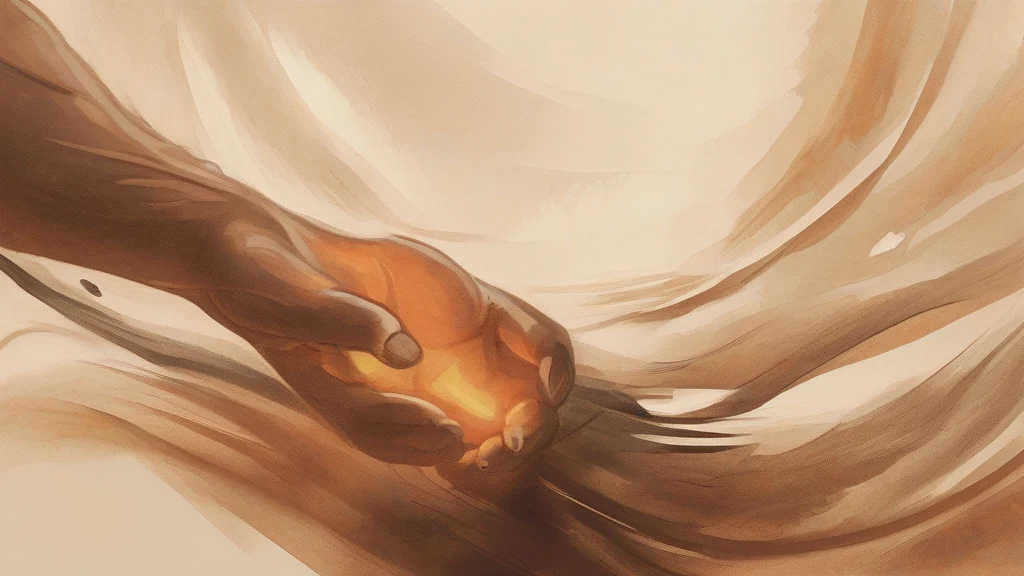
What does wringing mean?
Wringing is the present participle of wring and describes a forceful twisting or squeezing action, most often involving cloth or another wet material. A person may wring water from a towel, wring out clothes, or find them wringing wet after heavy rain. The action involves compression as well as rotation, allowing liquid to escape from the material being squeezed. Wringing also has a well-established figurative use: people wring their hands when feeling anxious, frustrated, guilty, or helpless. This expression conveys not only nervousness but also a wish to act in the face of a difficult situation. The word can additionally describe strong twisting pressure more generally. Although simple and everyday in meaning, wringing is vivid because it turns a physical action into a recognizable image of emotional tension and effort.
To twist or squeeze something firmly, especially wet cloth, in order to extract liquid; figuratively, to twist one's hands in anxiety or helplessness.
"He kept wringing the scarf, sending drops of water onto the floor."
The form functions as both the present participle and, with constructions such as “wringing the towel,” the gerund of wring.
Wet or saturated because liquid has been squeezed or twisted out.
"They arrived with their coats wringing wet."
This participial use is especially common in the established phrase “wringing wet.”
Wringing one's hands is anxiety made physical: twist, squeeze, and hope the worry loosens.
Reviewed by Deb Chak, Editor. AI-assisted content curated by RJS Tech Solutions LLP.
Where does wringing come from?
Wringing is formed from wring, an Old English verb meaning “to twist or turn,” with the suffix -ing. The English word belongs to a Germanic family that includes Dutch wringen and German ringen, both associated with twisting or struggling. Related English forms include wringer and wrangle, which continue the same broad tradition of twisting, turning, and entanglement.
How wringing is actually used
Wringing is the present participle and gerund of wring. Its literal use is common in contexts involving wet cloth, clothing, or other materials; the expression about twisting one's hands is strongly figurative and may suggest anxiety, guilt, frustration, or helplessness.
Easily confused with wringing
Wringing means twisting or squeezing something, whereas ringing means making a clear ringing sound or communicating by telephone.