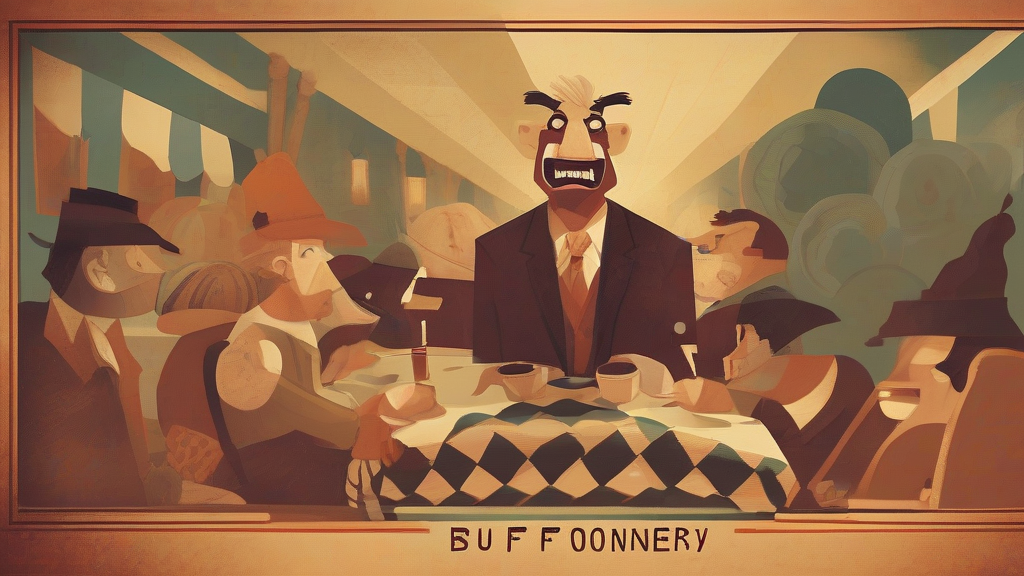
What does buffoonery mean?
Buffoonery refers to clownish, absurd, or ridiculous behaviour, particularly when it is performed deliberately to entertain or provoke laughter. The word derives from 'buffoon' — a comic figure or jester — and ultimately traces back through French and Italian roots associated with joking and jesting. In modern usage, buffoonery describes anything from harmless slapstick and playful antics to undignified conduct that embarrasses the person responsible. It often appears in critical contexts, as in 'political buffoonery' or 'sheer buffoonery', where the speaker means that someone's behaviour was foolish rather than genuinely funny. Though more formal than everyday alternatives such as 'tomfoolery' or 'clowning around', it remains a vivid and expressive word for describing behaviour that sacrifices dignity for laughs.
nounBuffoonery is clownish, absurd, or ridiculous behaviour, especially when performed to amuse an audience. It often carries a suggestion of undignified or foolish antics.
- Clownish or absurd behaviour intended to amuse; foolish, undignified antics.
"The debate quickly descended into sheer buffoonery."
"The press conference was less a policy announcement than an hour of pure buffoonery."
"Court jesters of the Middle Ages were paid professionals whose buffoonery was their livelihood."
The plural is rare and largely restricted to literary usage referring to multiple distinct acts or instances of clownish behaviour.
"The memoir recounts the buffooneries of his early stage career."
Buffoonery shares its roots with 'opera buffa' — the same Italian love of jest that gave us comic opera also gave us this word for clownish antics.
Reviewed by Deb Chak, Editor. AI-assisted content curated by RJS Tech Solutions LLP.
Etymology of buffoonery
Buffoonery comes from 'buffoon', which entered English in the mid-16th century from French 'bouffon', itself borrowed from Italian 'buffone', meaning a jester or comic. The Italian term derives from 'buffa', a jest or joke, related to the verb 'buffare'. The suffix '-ery' was added in English to form a noun denoting the practice or behaviour of such a figure. Related Italian-derived terms include 'buffo', used for a comic actor in opera, as in 'opera buffa'.
Related word forms
How buffoonery is actually used
Buffoonery is a formal-to-neutral literary word, slightly more elevated in tone than synonyms like 'clowning' or 'tomfoolery'. It frequently carries a mildly disapproving connotation, implying that the behaviour in question is beneath the dignity of the person or occasion involved.
Easily confused with buffoonery
A buffoon is the person who behaves in a ridiculous way, while buffoonery is the ridiculous behaviour itself.