What does abscised mean?
Abscised is the past tense and past participle of the verb 'abscise', meaning to cut off or shed — most commonly used in botany to describe a plant detaching its own leaves, flowers, fruit, or other parts. The process occurs at a specialized layer of cells called the abscission zone, where the plant actively severs the connection rather than merely letting the part wither and fall. A tree that has abscised its leaves in autumn, for instance, has done so through a controlled biological mechanism that conserves water and energy for winter. Because it belongs to formal scientific register, 'abscised' appears chiefly in botany textbooks, research papers, and horticultural writing rather than casual conversation, where simpler words like 'shed' or 'dropped' prevail. The word derives from the Latin 'abscindere', meaning to cut away, sharing its root with 'abscission' and, more distantly, 'scissors'. Its precise, technical character makes it valuable for writers who want accuracy when describing how plants manage their own growth and survival.
verbCut off or shed, especially by natural processes such as the dropping of leaves, flowers, or fruit from a plant. As the past tense and past participle of 'abscise', it describes something that has been detached or has detached itself in this way.
- (of a plant or plant part) having cut off or shed leaves, flowers, fruit, or other parts through the natural process of abscission.
- (rare, general use) having been cut off or removed.
"By late autumn, the tree had abscised nearly all of its leaves in response to the shortening days."
"The plant had abscised its lower leaves to conserve water during the drought."
"Researchers collected the abscised fruit from the orchard floor to study ripening."
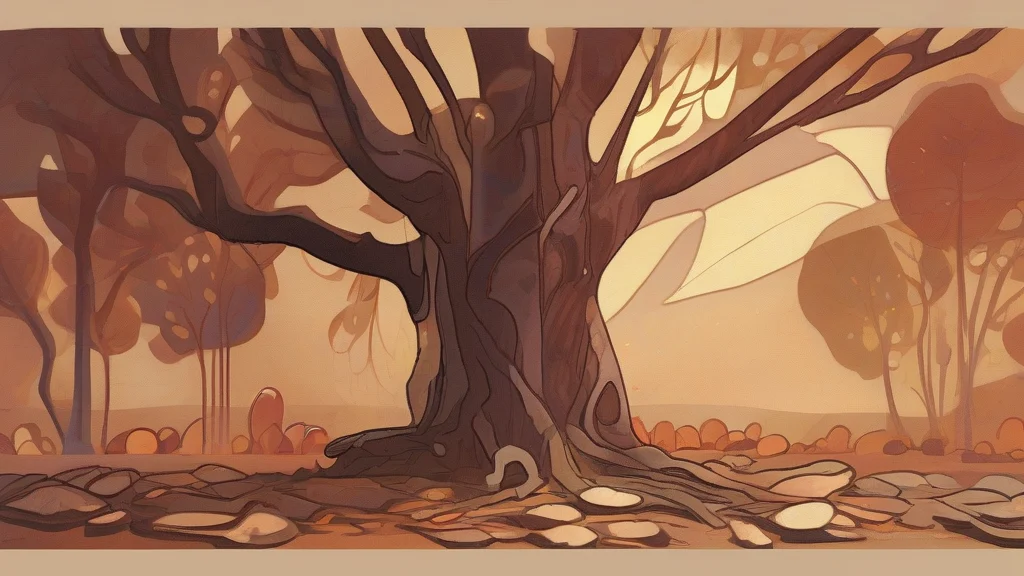
When a tree drops its leaves in autumn, botanists don't say it lost them — it deliberately abscised them, severing each one at a special cellular breakaway zone.
Reviewed by Deb Chak, Editor. AI-assisted content curated by RJS Tech Solutions LLP.
Etymology of abscised
Abscised comes from the Latin verb 'abscindere', formed from 'ab-' (away) and 'scindere' (to cut or split), so the literal sense is 'to cut away'. English adopted the related noun 'abscission' in the early 17th century, with the verb 'abscise' following later. The same Latin root 'scindere' also gave English words such as 'scissors' (via Greek 'skhizein' and Latin 'scissor') and 'concise' (literally 'cut short'), making them distant relatives of 'abscised'.
Related word forms
How abscised is actually used
Primarily a technical term in botany and plant science, 'abscised' is most often used in the passive or perfect forms ('leaves are abscised', 'the plant has abscised its fruit'). It sounds formal and scientific; in everyday speech, speakers would more likely say a plant 'dropped' or 'shed' its leaves. The related noun 'abscission' is more familiar than the verb in general scientific writing.
Easily confused with abscised
Abscission is the noun naming the process of a plant shedding leaves or fruit, while 'abscised' is the verb form describing something that has undergone that shedding.