What does agama mean?
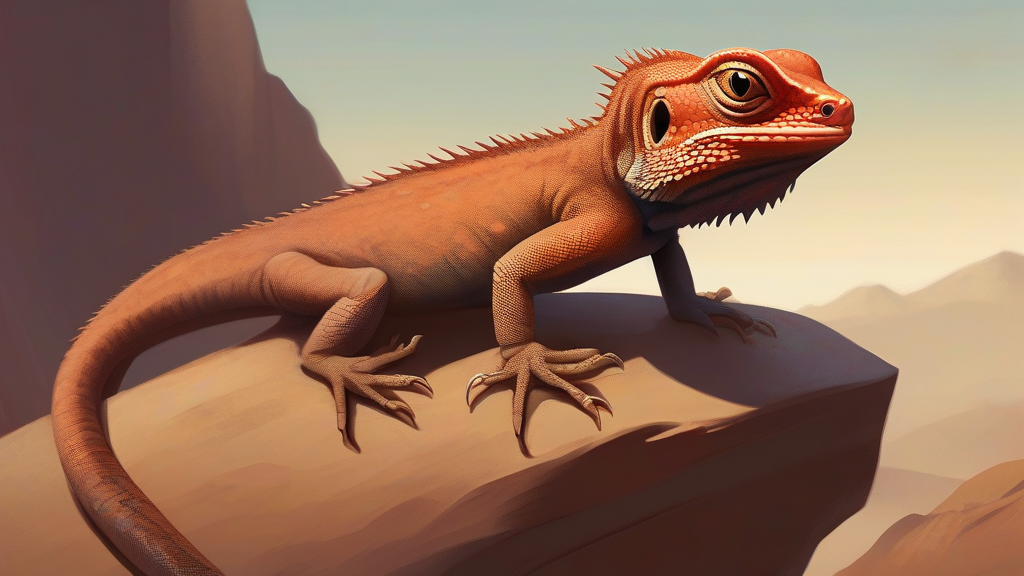
An agama is an Old World lizard belonging to the family Agamidae, a large and diverse group found across Africa, Asia, Australia, and parts of southern Europe. The name most often refers to the African genus Agama, whose best-known member, the common or red-headed agama, is a familiar sight basking on rocks, walls, and rooftops. Agamas typically have broad heads, rough overlapping scales, strong legs, and long tails, and they feed mainly on insects. Many species are notable for their dramatic sexual colouring: dominant males can shift from muted grey-brown to vivid orange and blue during the breeding season, using head-bobbing displays to defend territory and attract mates. The family also includes better-known relatives such as bearded dragons and frilled lizards. Though chiefly a term for naturalists and reptile enthusiasts, "agama" offers a vivid example of how scientific naming preserves indigenous word origins within modern taxonomy.
nounAn agama is any of numerous Old World lizards of the family Agamidae, typically having a broad head, rough scaled skin, and often brightly coloured males; the term especially denotes members of the African genus Agama, such as the common agama.
- Any of various Old World lizards of the family Agamidae, especially those of the African genus Agama, characterised by rough scales and, in many species, brightly coloured breeding males.
"A male red-headed agama basked on the sunlit rock, displaying his brilliant orange and blue breeding colours."
"The rock was crowded with agamas doing their characteristic head-bobbing displays."
"In East Africa, the red-headed agama is a familiar sight on garden walls and sunny footpaths."
The regular plural "agamas" is standard in modern usage; the Latin-style plural "agamae" appears only rarely in older scientific literature.
"Several agamas lined the stone wall, each bobbing its head in territorial display."
Male agamas can transform from dull grey to dazzling orange-and-blue in minutes — all to win the attention of a female.
Reviewed by Deb Chak, Editor. AI-assisted content curated by RJS Tech Solutions LLP.
Etymology of agama
The word "agama" entered European scientific vocabulary in the late eighteenth century, when it was adopted into taxonomic Latin as the name of the lizard genus Agama. It derives from a name for the animal in a West African language, transmitted through early European accounts of African fauna. As taxonomy developed, the related family name Agamidae was formed from the same root, so the word survives today both as the common noun "agama" and as the basis of the family's scientific designation.
How agama is actually used
"Agama" is primarily used in zoological, herpetological, and natural-history contexts rather than everyday conversation. It may refer broadly to any member of the family Agamidae — which also includes bearded dragons and frilled lizards — or more narrowly to the African genus Agama. The plural is usually "agamas," though "agamae" occasionally appears in older scientific writing.
Easily confused with agama
Iguanas are large New World lizards of the family Iguanidae, whereas agamas are generally smaller Old World lizards of the family Agamidae.
Chameleons are known for their independently mobile eyes, grasping feet, and colour-changing ability, while agamas are more typical running and climbing lizards without these specialised traits.