What does ambuscade mean?
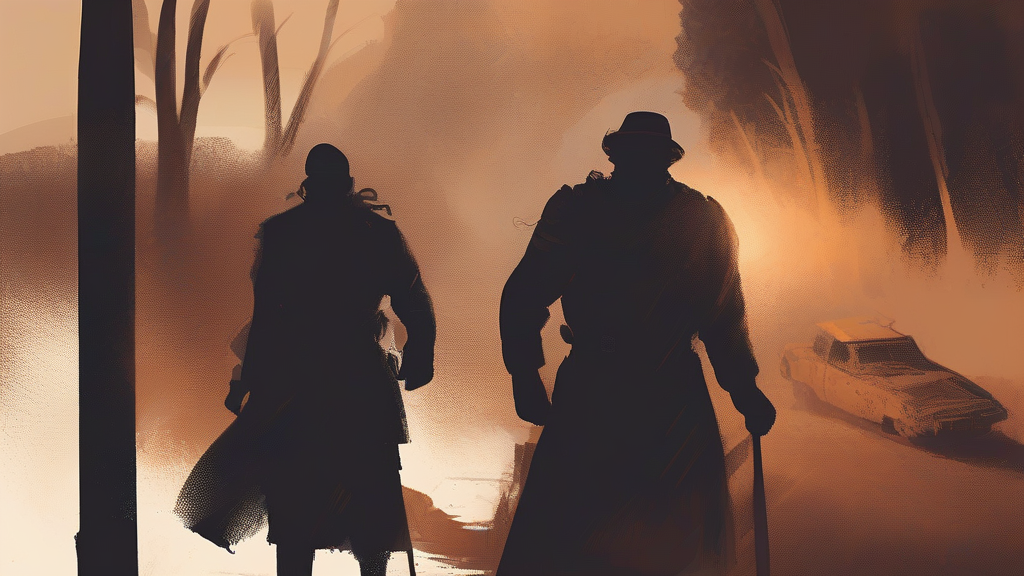
An ambuscade is a surprise attack carried out by attackers who lie concealed, waiting for their target to pass — and by extension, the hidden position itself from which the attack is sprung. The word entered English from French in the sixteenth century and was once the standard military term for this tactic, though today 'ambush' has largely taken its place in ordinary speech. As a result, ambuscade carries a distinctly literary and historical flavor: it turns up most often in war narratives, adventure fiction, and accounts of earlier eras, where it evokes forests, narrow passes, and enemies unseen until the moment of attack. Both noun and verb forms exist, so one may speak of laying an ambuscade or falling into one. For readers of history or classic literature, recognizing ambuscade adds precision and atmosphere to descriptions of stealthy, premeditated attacks.
A surprise attack by persons lying in wait in a concealed position; also, the concealed position itself.
"The column was decimated when it blundered into an ambuscade at the river crossing."
Now chiefly literary or historical; 'ambush' is the common modern equivalent.
To attack from a concealed position; to lie in wait to make such an attack.
"They ambuscaded the enemy convoy just before dawn."
The verb form is rare today and almost always replaced by 'ambush.'
Standard regular plural; used when referring to multiple such attacks or concealed positions.
"The campaign diary records several ambuscades along the forest road."
Before soldiers said 'ambush,' they said 'ambuscade' — a word that literally means hiding 'in the bushes' (in bosc), straight from medieval Italian woodland warfare.
Reviewed by Deb Chak, Editor. AI-assisted content curated by RJS Tech Solutions LLP.
Etymology of ambuscade
Ambuscade comes from the French 'embuscade,' derived from Italian 'imboscata,' rooted in 'imboscare' — literally 'to place in the woods' ('bosco' meaning wood or thicket) — reflecting the tactic's origins in woodland concealment. It entered English in the sixteenth century alongside its sibling word 'ambush,' which derives from the same Romance source via slightly different routes. Over time 'ambush' became the dominant everyday form, leaving 'ambuscade' as the more archaic, literary variant.
How ambuscade is actually used
Ambuscade is now largely literary, historical, or military-historical in register; in everyday English 'ambush' has almost entirely displaced it. It appears most often in accounts of older warfare, adventure fiction, and translations of classical or Renaissance texts.
Easily confused with ambuscade
Ambush is the far more common modern term for the same concept, while ambuscade is the older, more formal or literary variant; both denote a concealed surprise attack.