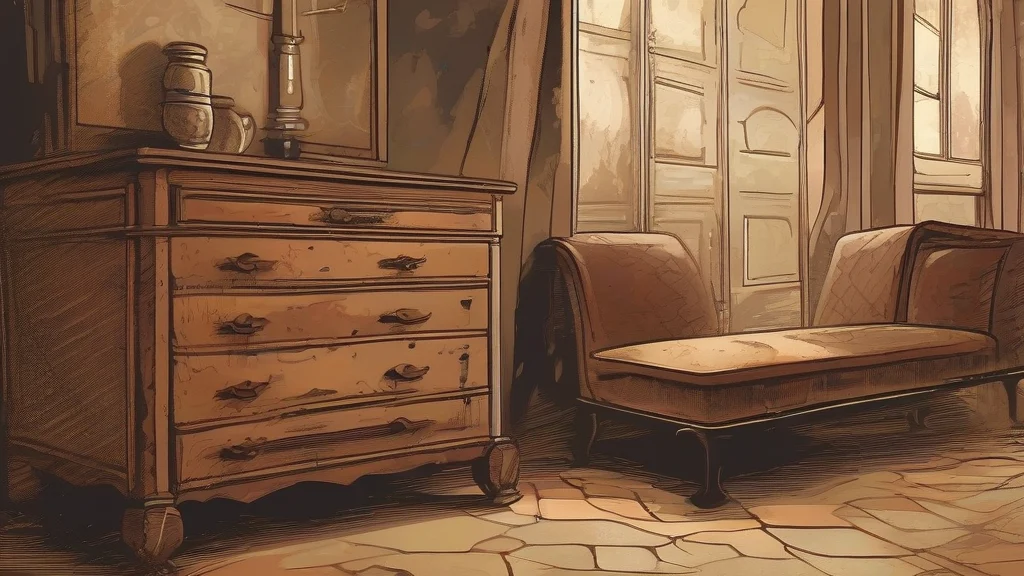
What does antiqued mean?
Antiqued describes objects or surfaces that have been deliberately made to look old. Most often applied to furniture, cabinetry, mirrors, and metal fixtures, an antiqued finish mimics the wear, patina, and softening that genuine age produces — through techniques like distressing, glazing, staining, or chemical treatment. The word functions both as an adjective ('an antiqued mirror') and as the past form of the verb 'to antique', meaning to apply such a treatment. Its use is concentrated in interior design, home décor, and craft writing, where it signals a popular aesthetic that values character and warmth over pristine newness. Importantly, antiqued implies artifice: unlike an antique, which is genuinely old, an antiqued item is usually newly made and merely styled to suggest history. This tension between appearance and reality makes the word a useful shorthand for a whole design sensibility built around manufactured nostalgia.
(Of an object or surface) treated or finished so as to have an aged or weathered appearance.
"The dining table had an antiqued cherry finish that gave it a warm, heirloom quality."
Used almost exclusively in design, décor, and retail product descriptions.
Past form of the verb 'to antique', denoting the act of giving something an artificial aged appearance.
"The frames were antiqued by hand before being hung in the gallery."
That 'centuries-old' mirror in a trendy café was probably born last year — it was simply antiqued.
Reviewed by Deb Chak, Editor. AI-assisted content curated by RJS Tech Solutions LLP.
Etymology of antiqued
Antiqued derives from 'antique', which English borrowed in the early 16th century from French, ultimately tracing back to the Latin 'antiquus' meaning 'old' or 'former'. While 'antique' originally referred to genuinely ancient things — especially classical art and artefacts — the verb 'to antique' emerged later in the decorative arts to mean giving new objects an aged appearance. Cognates sharing the Latin root include 'antiquity', 'antiquarian', and 'ancient' (via a related Latin form).
Related word forms
How antiqued is actually used
Most common in interior design, decorating, and craft contexts. The adjective sense typically describes finishes on wood, metal, glass, or paint. It carries a connotation of deliberate artifice rather than genuine age, which distinguishes it from terms like 'vintage' or 'period'.
Easily confused with antiqued
An antique is genuinely old (typically over 100 years), whereas something described as antiqued is new but artificially treated to look old.