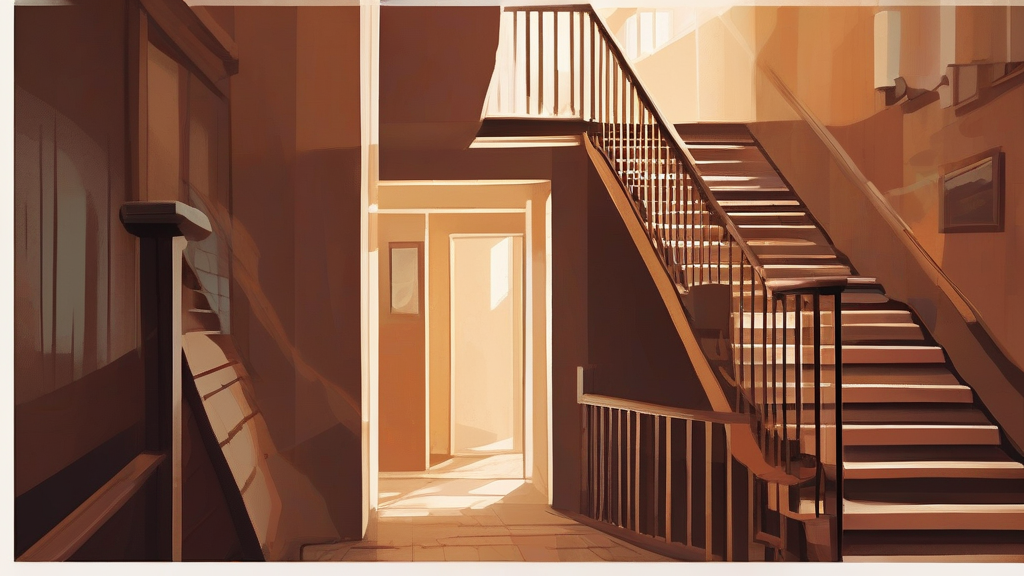
What does backstair mean?
"Backstair" is an adjective describing conduct that is secret, unofficial, and typically disreputable — dealings carried out away from public scrutiny, as though hidden on a private rear staircase. It arises from the literal architecture of grand houses and palaces, where a secondary staircase allowed servants and discreet visitors to move unseen, and it came to stand for the furtive influence and intrigue such passages made possible. Today the word appears almost exclusively in its extended compound form "backstairs," as in "backstairs influence" or "backstairs gossip," and it carries a strongly negative connotation: it suggests manipulation, favoritism, or conspiracy conducted without openness or accountability. Writers use it most often in political and historical contexts, where it evokes court intrigue and behind-the-scenes power brokering. Its near synonyms include underhand, clandestine, and surreptitious, but none captures quite so vividly the image of whispered schemes on a dim palace stair.
adjectiveSecret, furtive, or underhand; conducted by stealthy or unofficial means, as if behind the scenes. The term is most often used attributively in the fuller form 'backstairs' to describe intrigue carried out away from public view.
- (of actions, dealings, or influence) secret, unofficial, and often disreputable — conducted away from public view, originally via a servants' or rear staircase.
"The minister's backstair negotiations undermined the official peace talks."
"He secured the contract through backstair dealings rather than open bidding."
"Court historians have long documented the backstair maneuvering that shaped the king's decisions."
Before telephones and email, royal palaces literally had a separate rear staircase — the 'backstairs' — reserved for servants and discreet visitors, which is how the word became shorthand for political intrigue.
Reviewed by Deb Chak, Editor. AI-assisted content curated by RJS Tech Solutions LLP.
Etymology of backstair
The word derives from the English compound "back + stair," first appearing in the seventeenth century in reference to the secondary staircases of large houses and palaces used by servants and private visitors. Because these rear stairs allowed people to reach important rooms without being seen, the phrase "backstairs" became proverbial for secret, unofficial routes to power — hence figurative senses like "backstairs influence." The element "stair" comes from Old English "stǣger," meaning a flight of steps, making the word a native Germanic formation rather than a Latin or French borrowing; its relatives include "staircase," "upstairs," and "downstairs."
Related word forms
How backstair is actually used
Almost always derogatory in connotation, implying dishonesty or improper influence. In modern usage the compound form 'backstairs' is considerably more common than the bare adjective 'backstair'; both appear chiefly in formal journalism and historical writing.
Easily confused with backstair
'Backstair' describes secretive, unofficial dealing done out of public sight, while 'backstabbing' refers specifically to treacherous betrayal of a person who trusts you.