
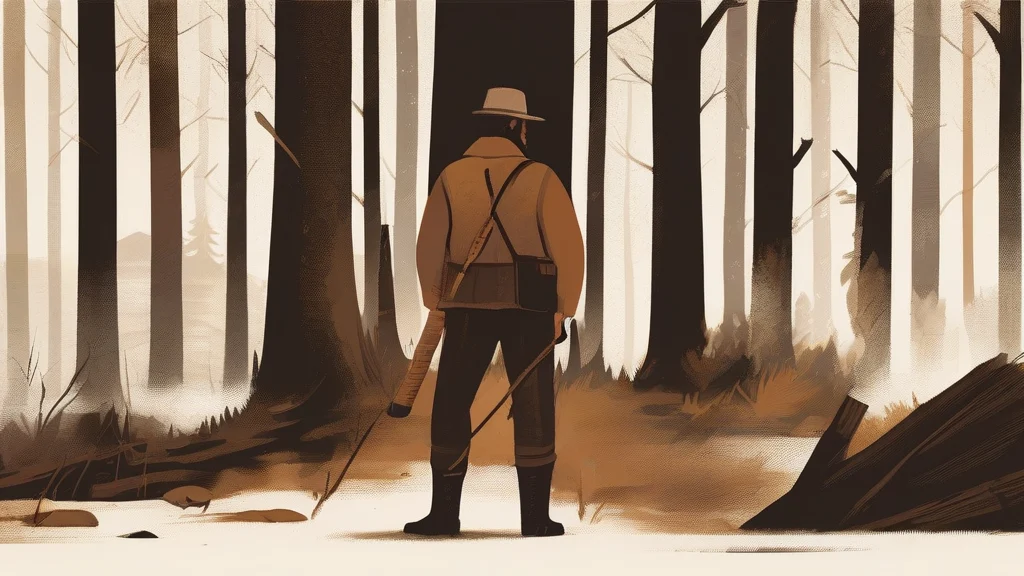
What does backwoodsmen mean?
Backwoodsmen is the plural form of backwoodsman and denotes people—historically almost always men—who live in or come from remote, densely forested regions well away from towns and cities. The word emerged in eighteenth- and nineteenth-century North America, where settlers pushing into the Appalachian and trans-Appalachian wilderness were widely described as backwoodsmen: hunters, trappers, and small farmers celebrated for their self-reliance, marksmanship, and hardiness. Figures like Daniel Boone became the archetypal example, and the term fed directly into the enduring American myth of the rugged frontier hero. In British usage the word took on a different flavor, sometimes applied dismissively to Members of Parliament seen as provincial or resistant to progress. Today backwoodsmen appears chiefly in historical writing, biography, and period fiction, where its connotation ranges from admiration for frontier toughness to gentle mockery of rustic isolation. It is best understood alongside its singular form, backwoodsman, and the broader term backwoods.
nounThe plural of backwoodsman: people, especially men, who live in or come from remote, heavily forested regions far from settled towns and cities.
- (plural) Men who live in or come from remote forested backcountry regions.
- (figurative, often disparaging) People regarded as unsophisticated, uncultured, or out of touch because of their rural isolation.
"The backwoodsmen guided the surveying party through territory no outsider had mapped."
"Daniel Boone remains the archetypal American backwoodsman, and legends like him were once called simply 'our backwoodsmen.'"
"London journalists sneered at the backwoodsmen in the House of Commons who resisted reform."
This word is itself the standard plural of backwoodsman; there is no further plural form. Use backwoodsman when referring to one person.
"Hardy backwoodsmen carved homesteads out of the Kentucky wilderness."
In early American politics, being called a backwoodsman was both an insult from city elites and a badge of rugged honor — Andrew Jackson built a whole presidential image on it.
Reviewed by Deb Chak, Editor. AI-assisted content curated by RJS Tech Solutions LLP.
Etymology of backwoodsmen
The word derives from backwoods, a compound of 'back' (behind or beyond settled areas) and 'woods,' which arose in colonial North America during the late seventeenth or early eighteenth century to describe the uncleared forest lying beyond the frontier of settlement. Backwoodsman was formed straightforwardly from that place-name to describe the people inhabiting it, and backwoodsmen is simply its regular plural. The term shares its roots with other words for remote or unsettled land, such as wilderness and hinterland.
Related word forms
How backwoodsmen is actually used
Almost always used as a plural noun; the singular form backwoodsman is the base word. The term can carry a neutral-to-admiring tone in American frontier contexts (rugged independence, self-reliance) but a condescending tone in British usage, where 'backwoodsman' historically described reactionary or provincial members of Parliament. Largely historical today, surviving mainly in historical writing and period fiction.
Easily confused with backwoodsmen
Backwoodsman is the singular form referring to one such person, while backwoodsmen refers to more than one.