What does baghouse mean?
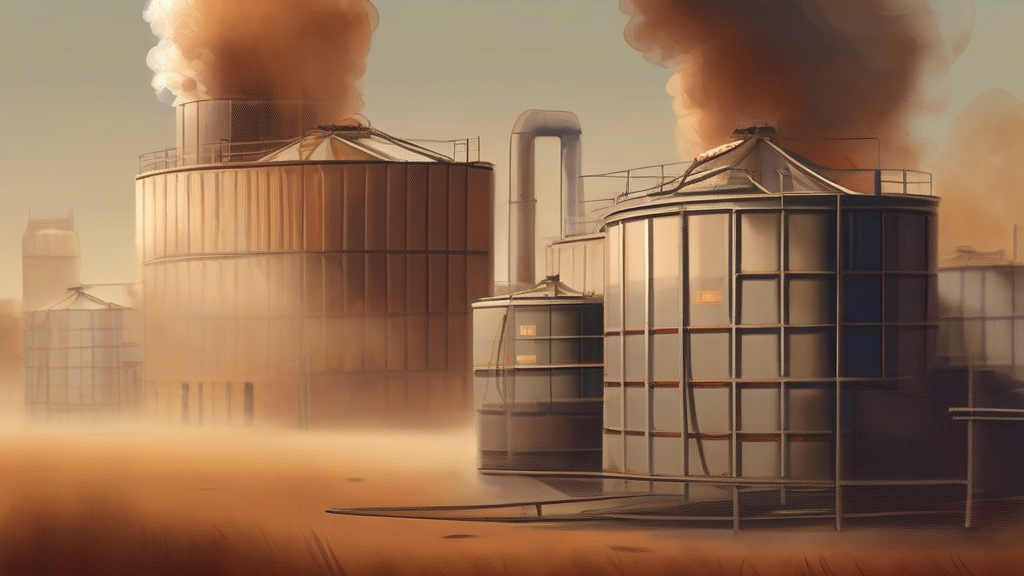
A baghouse is a large piece of industrial air-pollution-control equipment designed to remove fine particulate matter from exhaust gases. It works by drawing dust-laden air through an enclosed chamber containing numerous long, tube-shaped fabric filters — the "bags" that give the device its name. As the gas passes through the fabric, particles are trapped on or inside the bags, and the cleaned air is vented out; the collected dust is periodically shaken loose or blasted off by pulses of compressed air and removed for disposal. Baghouses are among the most efficient dust collectors available, often capturing well over 99% of particulates, and they are widely used in industries such as cement manufacturing, steelmaking, power generation, mining, and woodworking. The word appears almost exclusively in technical, regulatory, and trade contexts, making it essential vocabulary for engineers, plant operators, and environmental compliance professionals rather than for general readers.
nounAn industrial dust-collection system in which dusty gas or air is passed through fabric filter bags that trap particulate matter, allowing cleaned gas to exit.
- A large industrial dust-collection device consisting of an enclosure housing rows of fabric filter bags through which dusty gas is drawn, trapping particulates so that cleaner air is discharged; used especially in industries such as cement, steel, power generation, and woodworking.
"The cement plant installed a new baghouse to bring its emissions within regulatory limits."
"The sawmill's aging baghouse was replaced with a high-efficiency unit that cut visible emissions dramatically."
"Maintenance crews inspected the baghouse filters weekly, checking for tears and excessive dust loading."
The plural is regular and commonly appears when discussing multiple units across facilities or comparing different designs.
"Both cement kilns at the site are equipped with pulse-jet baghouses."
The 'bags' in a baghouse are literally giant fabric socks — some plants use thousands of them — that strain tons of fine dust out of exhaust air every day.
Reviewed by Deb Chak, Editor. AI-assisted content curated by RJS Tech Solutions LLP.
Etymology of baghouse
The term baghouse is formed transparently from the English words "bag," referring to the fabric filter tubes at its heart, and "house," referring to the enclosing structure that holds them. It arose as a practical coinage within American and British industry during the twentieth century, as fabric-filter dust-collection technology became widespread in heavy manufacturing. Because it is a straightforward compound of two common English words rather than a borrowing, it has no cognates in other languages beyond those shared with bag and house themselves.
Related word forms
How baghouse is actually used
Baghouse is a technical term used mainly in industrial engineering, environmental regulation, and pollution-control contexts. It is rarely encountered in everyday conversation but appears frequently in trade literature, permits, and emissions compliance documents. It is sometimes written as two words ("bag house") or hyphenated ("bag-house").
Easily confused with baghouse
Baggage refers to travelers' luggage, while a baghouse is stationary industrial equipment for filtering dust from air or gas streams.