What does ballistae mean?
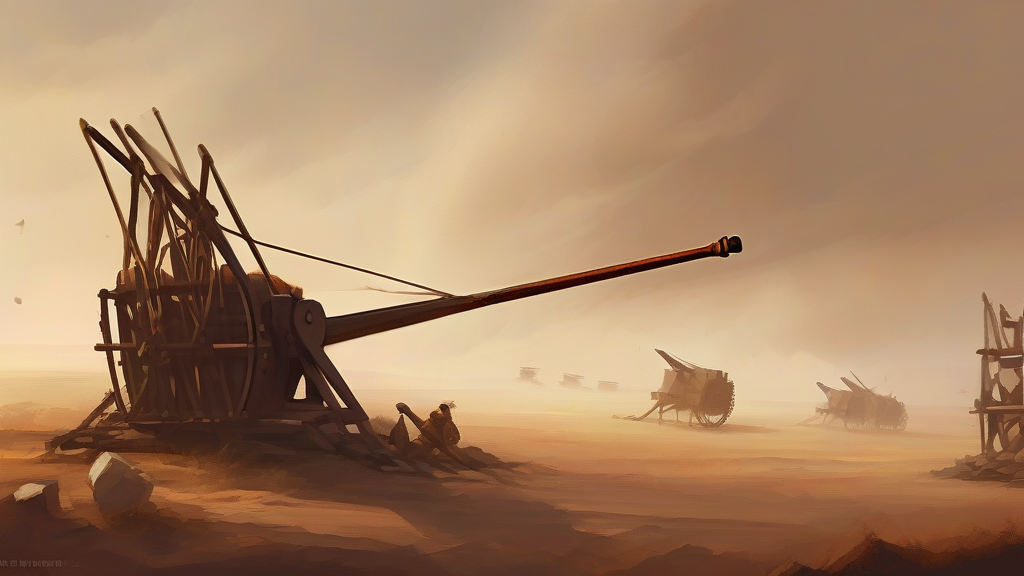
Ballistae is the plural of ballista, a powerful ancient missile weapon that functioned like an enormous crossbow. Powered by twisted sinew or rope springs that stored torsion energy, a ballista could launch heavy bolts or stone projectiles over considerable distances with impressive accuracy. Ballistae were central to the artillery of Greek and especially Roman armies, used both defensively on city and fortress walls and offensively during sieges, where they could target individual soldiers or batter fortifications from afar. The word today appears almost exclusively in discussions of ancient warfare, archaeology, museum displays, historical reenactment, and fantasy fiction or games. Its singular form, ballista, follows Latin declension patterns, giving the English plural its distinctive -ae ending. Beyond its historical interest, the word has left a lasting linguistic legacy: the modern term "ballistics," describing the science of projectile motion, derives directly from the same root.
noun (plural)The plural of ballista — large ancient missile weapons, resembling oversized crossbows, that launched heavy bolts or stones, especially in Roman warfare.
- Plural of ballista: ancient torsion-powered missile weapons resembling giant crossbows, used in classical and medieval warfare to hurl bolts or stones.
"The legionaries wheeled their ballistae to the top of the rampart and rained bolts down on the besiegers."
"Archaeologists uncovered the iron bolts once loaded into the fort's ballistae."
"In the historical novel, defenders mounted ballistae along the city walls to repel the assault."
This is already the standard plural of the singular noun "ballista" (from Latin first declension). It has no further plural; treat it as a finished plural form.
"The museum displayed several restored Roman ballistae."
A single Roman ballista bolt could punch through armor and pin two soldiers together at hundreds of paces — and 'ballistic' as in ballistic missile comes straight from this machine's name.
Reviewed by Deb Chak, Editor. AI-assisted content curated by RJS Tech Solutions LLP.
Etymology of ballistae
Ballistae is the plural of ballista, borrowed into English in the late 16th century from Latin, which itself took the word from Greek ballein-related terminology — the Greek root ballein means "to throw." The same Greek root gives us the modern word "ballistics" and related forms like "ballistic" and "hyperbole" (literally "throwing beyond"). The -ae ending reflects the Latin first-declension plural retained in scholarly and technical usage.
How ballistae is actually used
"Ballistae" is the standard English plural of "ballista" (following the Latin pattern); the anglicized "ballistas" also appears but is less common. The word is largely confined to historical, archaeological, military-history, and fantasy-gaming contexts rather than everyday speech.
Easily confused with ballistae
Ballast is heavy material used to stabilize ships or vehicles; ballistae are ancient missile-throwing siege weapons.