What does bandwagon mean?
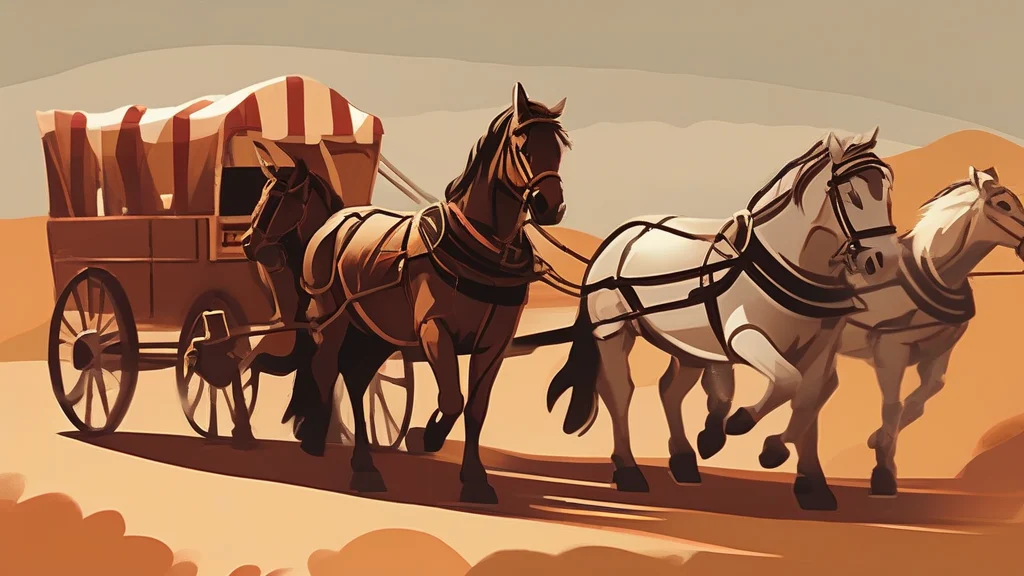
A bandwagon was originally a large, elaborately decorated wagon used to carry a band of musicians in a circus parade or political procession. Its modern meaning, however, is almost entirely figurative: a bandwagon is any trend, campaign, or cause that attracts growing support simply because it appears to be succeeding. To 'jump,' 'climb,' or 'hop' on the bandwagon is to join such a movement, often with the implication that one is motivated by opportunism or a reluctance to be left behind rather than by genuine conviction. Political commentators use the term constantly, and social scientists speak of the 'bandwagon effect' — the tendency of people to adopt beliefs or behaviors because many others already do. The word thus captures a familiar human dynamic: momentum breeds more momentum. Knowing it helps readers recognize when enthusiasm for a fad, product, or candidate reflects real merit and when it merely reflects popularity itself.
nounA large wagon, formerly drawn by horses, used to carry a band of musicians in a parade or circus procession. Figuratively, it refers to a cause, trend, or activity that people join or support once it appears likely to succeed.
- Figurative: a movement, trend, or cause that people join because it seems likely to succeed.
- Literal (historical): a large wagon carrying a band of musicians, used in circuses and political processions.
"Once the candidate's poll numbers surged, half the party jumped on the bandwagon."
"Investors piled onto the bandwagon as the stock climbed for a fifth straight week."
"In the old circus parades, the band rode on a gaudily painted bandwagon at the head of the procession."
Regular plural; rare outside historical descriptions of circus or parade wagons.
"Vintage photographs show several brightly painted bandwagons lined up before the circus parade."
Politicians literally hired bands to ride ahead of their parades so crowds would follow — and that's why we still say someone has 'climbed aboard the bandwagon.'
Reviewed by Deb Chak, Editor. AI-assisted content curated by RJS Tech Solutions LLP.
Etymology of bandwagon
Bandwagon arose in mid-19th-century America as a compound of 'band' and 'wagon', naming the wagons that carried brass bands in circus parades and political campaigns. Because politicians used these wagons to lead processions and draw cheering crowds, the phrase 'to jump on the bandwagon' came to mean attaching oneself to a winning cause. By the early 20th century the figurative sense had become standard in American English and spread widely thereafter.
How bandwagon is actually used
Almost all modern usage is figurative; the literal sense is now largely historical. The figurative sense often carries a mildly negative connotation, implying opportunism or unreflective conformity — joining something because it is winning rather than out of genuine conviction. The phrase 'jumping on the bandwagon' is common in both journalism and everyday speech.
Easily confused with bandwagon
A bandstand is an open-air structure for musicians to perform in, whereas a bandwagon is a wagon that carries a band in a procession — or, figuratively, a popular cause.