
What does barghest mean?
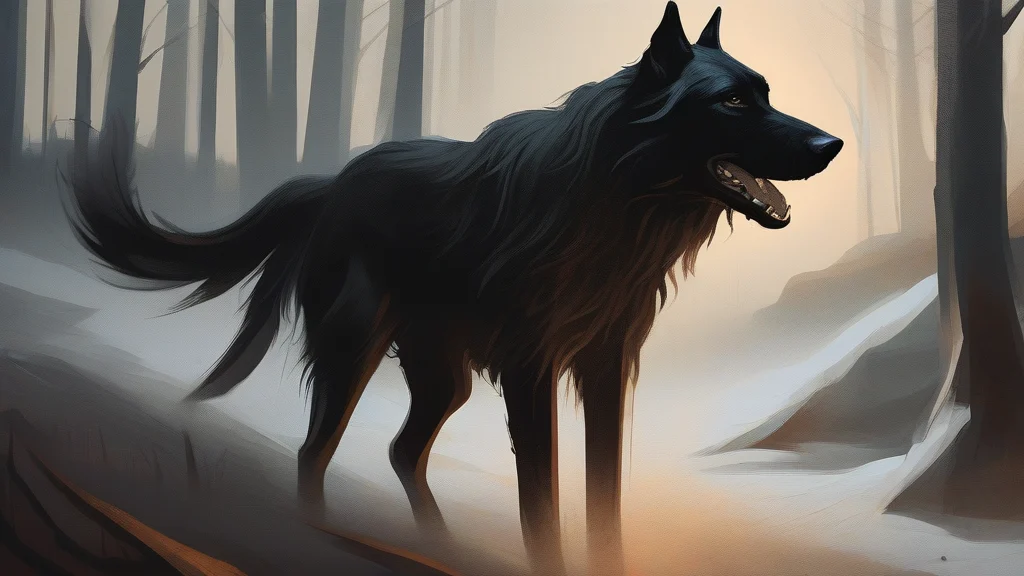
A barghest is a frightening goblin-like creature from British folklore, particularly the folklore of northern England. Such beings were often imagined as ugly, grotesque, and animal-like, sometimes resembling a shaggy dog and haunting a particular building, wood, or locality. Folklore also associated them with ominous events, making their appearance an apparent portent of danger. In modern figurative use, “barghest” denotes a dreaded person, institution, prospect, or thing, usually in deliberately literary or archaic language. The word is less common than “goblin” or “specter,” but it has a distinctive cultural history and a more forbidding atmosphere. It can therefore add color and old-world menace to writing about supernatural folklore, local legend, or something regarded as an inescapable threat. Although “barghest” remains most strongly associated with northern English traditions, it is understood throughout British and American English.
nounA goblin-like creature of English folklore, often described as ugly, frightening, and doglike, and associated with particular places or families. By extension, the word can refer to a dreaded person, thing, or situation.
- A goblin-like or monstrous creature of English folklore, often said to haunt a particular place.
- A person or thing regarded as frightening, threatening, or hateful.
"The village had long been haunted by tales of a barghest lurking in the old woods."
"Local stories insisted that a barghest watched the ruined house at the end of the lane."
"The proposed redevelopment quickly became the neighborhood's barghest, provoking furious objections."
The plural is used for multiple creatures of this kind or, figuratively, for multiple dreaded people or things.
"The stories described a whole pack of barghests haunting the moors."
In northern English folklore, the barghest was part goblin, part spectral hound—and its very appearance could be a warning of disaster.
Reviewed by Deb Chak, Editor. AI-assisted content curated by RJS Tech Solutions LLP.
Where does barghest come from?
The word's precise origin is uncertain. It is recorded in early modern English as the name of a goblin or hobgoblin in northern English folklore, and its later figurative sense developed from that traditional creature. Because its derivation is obscure, it is not generally assigned a secure set of cognates.
How barghest is actually used
The word is chiefly associated with British and especially northern English folklore. Its figurative use is literary or deliberately archaic in tone and may suggest something sinister, grotesque, or persistently threatening.
Easily confused with barghest
A bugbear is chiefly a figurative source of fear or dread, whereas a barghest is specifically a goblin-like creature from English folklore.
A ghost is generally the spirit or apparition of a dead person, while a barghest is a more grotesque, often animal-like being in folklore.