What does baryton mean?
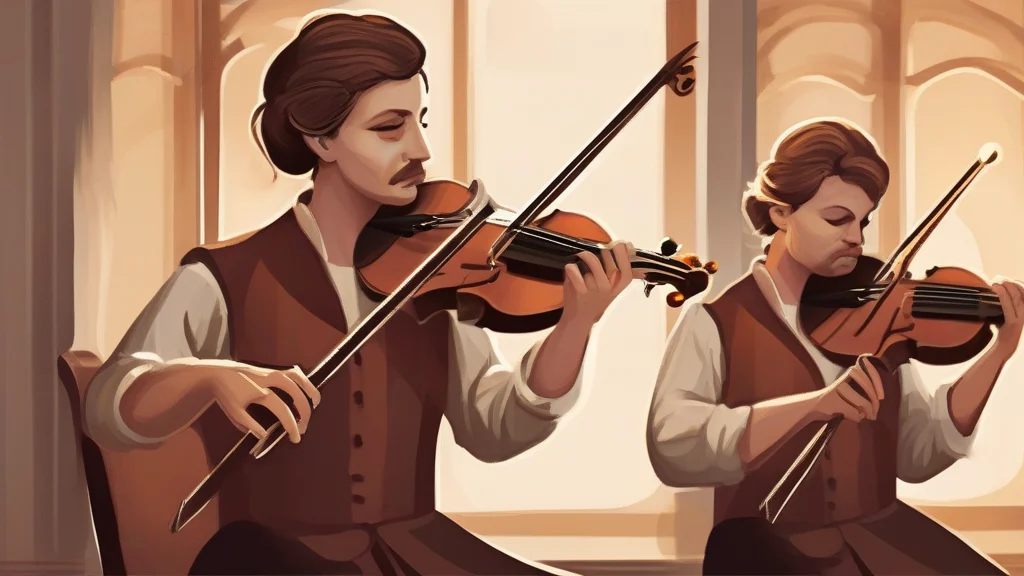
The baryton is a rare bowed string instrument belonging to the viol family, which flourished chiefly during the seventeenth and eighteenth centuries before fading into near-total obscurity. It typically carried six or seven bowed playing strings over the fingerboard, together with a larger number of wire strings running behind the neck; these sympathetic strings vibrated along with the bowed notes, enriching the sound, and could additionally be plucked by the thumb of the left hand, allowing a skilled player to produce melody and accompaniment simultaneously. Its most famous association is with Joseph Haydn, who composed well over a hundred works for the instrument because his patron, Prince Nikolaus Esterházy, was an enthusiastic amateur player. The name derives ultimately from the Greek word for 'heavy' or 'low', reflecting the instrument's deep register.
nounA bowed string instrument of the viol family, popular in the 17th and 18th centuries, fitted with additional sympathetic strings that can also be plucked by the thumb to add resonance and accompaniment.
- A bowed string instrument of the viol family, with six or seven playing strings and numerous sympathetic strings that may be plucked by the left-hand thumb, used mainly in 17th- and 18th-century Europe.
"Haydn composed more than a hundred works for his patron's baryton at the Esterházy court."
"The ensemble revived a rarely heard baryton sonata from Haydn's Esterházy years."
"Playing the baryton demanded unusual skill, since the performer had to bow one set of strings while plucking others with the same hand."
Regular plural formation; occasionally rendered as the French-style plural 'barytons' in either case.
"Few surviving barytons are playable today, making modern performances exceptionally rare."
Joseph Haydn wrote over 120 pieces for the baryton simply because his employer, Prince Nikolaus Esterházy, insisted on playing this now-vanished instrument himself.
Reviewed by Deb Chak, Editor. AI-assisted content curated by RJS Tech Solutions LLP.
Etymology of baryton
The word baryton comes from French, adopted in the early modern period, and derives ultimately from Greek 'barys', meaning 'heavy' or 'low', combined with a suffix relating to tone — hence literally a 'deep-toned' instrument. The same Greek root underlies related words such as baritone, barometer, and isobar. English usage of the term dates from around the seventeenth century, coinciding with the instrument's period of popularity.
How baryton is actually used
A rare, specialist term encountered almost exclusively in music history and early-music performance contexts. The word is sometimes confused in spelling with 'baritone'.
Easily confused with baryton
A baritone is a male voice or brass instrument of middle-low range, while the baryton is an obscure bowed string instrument of the viol family.
The baryton is spelled without the 'e' after 'bar' and refers specifically to the historical string instrument, not the voice type.