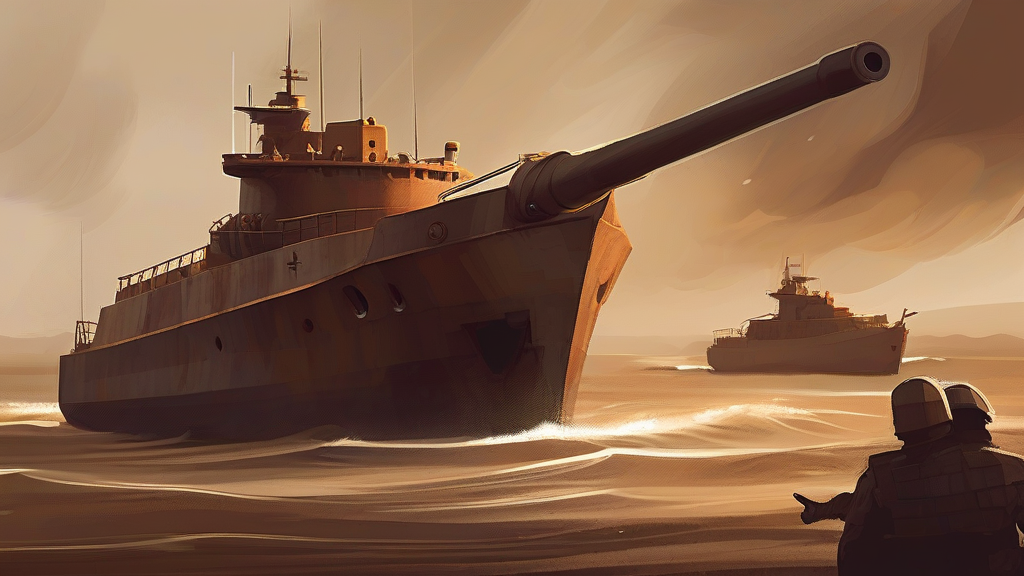
What does battlewagon mean?
"Battlewagon" is an informal English noun for a battleship — one of the largest and most heavily armed warships ever built. The term arose among sailors and naval enthusiasts as a colorful, slightly affectionate nickname: these vessels were so massive, thickly armored, and comparatively ponderous that calling them wagons was a wry acknowledgment of their sheer bulk. While never a formal naval designation, the word appears frequently in memoirs, journalism about naval history, and conversation among veterans. By extension, it is sometimes applied humorously to any large, rugged vehicle that has endured hard use, from an aging truck to an old family car. Because it carries a connotation of sturdy, battle-tested reliability rather than elegance, describing something as a battlewagon suggests respect for its toughness. Writers who want an evocative alternative to the technical term "battleship" will find this word useful when the tone is informal, nostalgic, or admiring of raw power.
nounAn informal term for a large, heavily armed warship, especially a battleship.
- An informal name for a battleship or other heavily armored warship.
- Occasionally, any large, cumbersome vehicle, especially one used in demanding conditions.
"The old battlewagon had served the navy for four decades before being decommissioned."
"Veterans gathered on deck as the battlewagon made her final voyage to the scrapyard."
"He called his battered old pickup truck his battlewagon, and it had earned the name."
Standard plural; simply add -s.
"The fleet's last two battlewagons were retired in the 1990s."
Sailors nicknamed their massive battleships "battlewagons" — a term of grudging endearment for ships so big and slow they were essentially floating wagons bristling with guns.
Reviewed by Deb Chak, Editor. AI-assisted content curated by RJS Tech Solutions LLP.
Etymology of battlewagon
The word is a straightforward compound of "battle," from Old French "bataille" (ultimately from Late Latin "battualia," fighting exercises), and "wagon," borrowed into English from Dutch "wagen" in the early modern period. It emerged as sailor slang, most prominently during the era of the great dreadnought battleships of the late nineteenth and early twentieth centuries. Its components are ordinary English words, so it has no distant cognates beyond those shared by "battle" and "wagon" themselves.
How battlewagon is actually used
Register is informal and often nostalgic or affectionate; the term is used chiefly by naval personnel, veterans, and military history enthusiasts rather than in formal writing.
Easily confused with battlewagon
"Battleship" is the formal naval designation for a class of heavily armed warship, whereas "battlewagon" is an informal, affectionate nickname for such a vessel.