What does blatting mean?
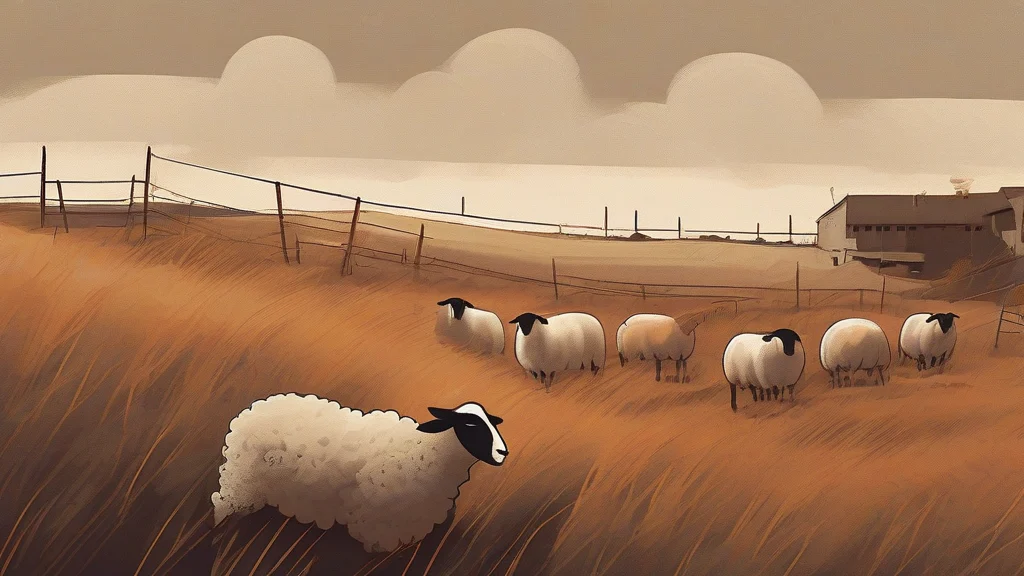
Blatting is the present participle of the verb "blat," an English word with two main uses. In its older and most literal sense, it means to bleat — to make the wavering cry of a sheep or calf — and it remains common in agricultural and rural contexts, where livestock are described as blatting for food or their mothers. By extension, it can describe any loud, raucous, honking outcry, such as that of a horn. In informal American usage, it has also come to mean talking loudly, indiscreetly, or foolishly. The word is distinctly colloquial: it belongs to barnyards, farm fiction, and casual speech rather than formal prose, and it often carries a mildly comic or derogatory connotation. Readers encountering it will usually find it evoking noise — animal or human — made without restraint or discretion.
verb (present participle)Present participle of "blat": to bleat like a sheep or calf, or more generally to make a loud, raucous, or foolish outcry; in informal use, to talk loudly and indiscreetly.
- To bleat or cry like a sheep or calf.
- To make a loud, raucous outcry or honking sound (as a horn).
- (Informal) To talk loudly and indiscreetly.
"The lambs were blatting for their mothers across the field."
"The hungry calves stood at the gate, blatting for their feed."
"He kept blatting about the plan before anyone had agreed to it."
Before it meant anything else, "blat" was simply what farmers called the noise a hungry calf makes — and it's still doing that job today.
Reviewed by Deb Chak, Editor. AI-assisted content curated by RJS Tech Solutions LLP.
Etymology of blatting
The verb "blat" arose as an imitative or echoic formation, coined to mimic the sound of a bleating sheep or calf. It is first attested in the nineteenth century, particularly in American English, where dialect writers adopted it to render farmyard noises on the page. Some dictionaries note possible blending or association with "bleat" and with dialect words for lowing cattle, but its core origin is clearly onomatopoeic rather than inherited from Latin or Greek. Its figurative extension to loud, indiscreet human talk developed later from the same idea of unrestrained noise.
Related word forms
How blatting is actually used
Primarily colloquial and rural in flavor when describing animal sounds; the sense of loud, indiscreet talk is informal and chiefly American. Rarely used in formal writing.
Easily confused with blatting
"Bleating" is the standard term for the sound a sheep or goat makes, while "blatting" is a more colloquial variant that can also cover any harsh, noisy crying out.
"Blathering" means talking long-winded nonsense, whereas "blatting" refers either to animal-like bawling or loud, indiscreet talk.