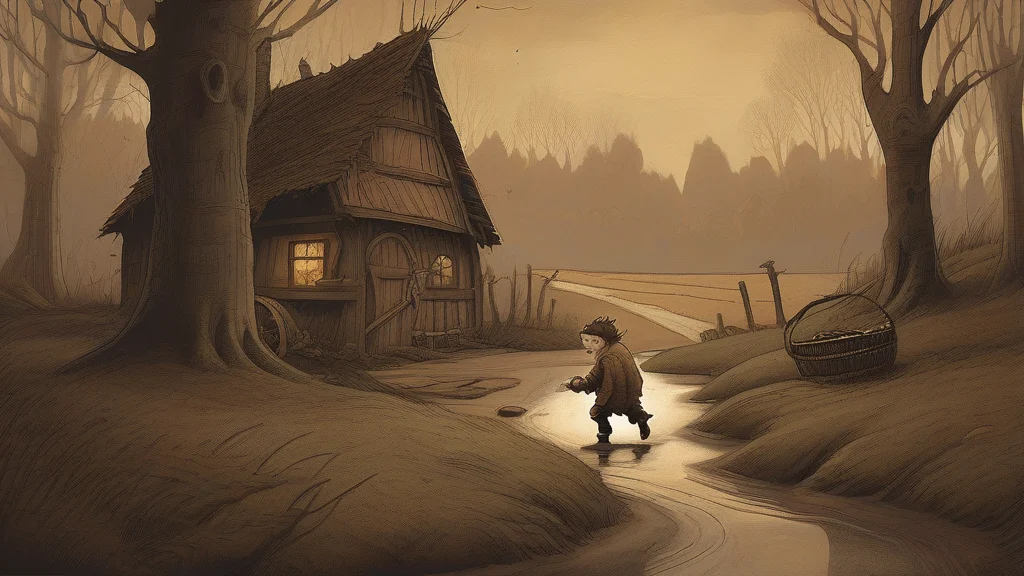
What does boggart mean?
A boggart is a malevolent spirit of English folklore, particularly associated with Northern England, where it was believed to haunt houses, barns, and lonely places. Household boggarts torment the family they attach themselves to: milk sours, crockery breaks, tools go missing, and sleep is disturbed by unexplained noises. Unlike the helpful brownie, the boggart is destructive by nature, and folklore held that once a boggart took up residence it was extremely difficult to drive away — some tales warn that moving house only brings the creature along. The word also serves as a broader term for any frightening goblin or spectre of the wild. Linguistically, 'boggart' shares roots with 'bogle', 'bugbear', and 'bogey', all deriving from words for terror or hobgoblins. Today the word survives mainly in folklore studies, regional writing, and fantasy fiction such as Susan Cooper's 'The Boggart', giving readers an evocative window into centuries-old beliefs about the unseen inhabitants of the home and countryside.
nounIn English folklore, especially that of Northern England, a boggart is a malevolent household spirit or goblin that torments a family by breaking objects, souring milk, and causing mischief; the term also refers more broadly to a frightening or malevolent supernatural creature.
- A malevolent household spirit in Northern English folklore that torments families with mischief and destruction.
- By extension, any frightening or malevolent supernatural creature or goblin.
- (Rare, dialectal) A scarecrow or frightening object used to deter birds.
"The farmer blamed his ruined harvest on the boggart haunting the old barn."
"Villagers left offerings at the edge of the wood to appease the boggart said to dwell there."
"Every morning the milk had soured and the chairs were overturned — the work of the boggart, the old woman insisted."
Standard pluralization; used when discussing multiple spirits collectively, as in folklore surveys.
"Old tales describe boggarts lurking in mill races and lonely lanes across the Pennines."
In Yorkshire folklore, one family was so tormented by their boggart that they moved house to escape it — only to discover the creature had stowed away in their moving cart.
Reviewed by Deb Chak, Editor. AI-assisted content curated by RJS Tech Solutions LLP.
Etymology of boggart
Boggart originates in Northern English dialect, first recorded around the early 17th century, and belongs to a family of words for terrifying spirits derived ultimately from 'bog'/'bug'-type roots meaning goblin or dread — a lineage shared with Scots 'bogle', 'bugbear', and 'bugaboo'. Its exact deeper origin is uncertain, but it reflects the medieval Germanic vocabulary of fear-spirits. The word remained largely regional until revived through folklore collections and modern fantasy literature.
Related word forms
How boggart is actually used
The term belongs chiefly to Northern English dialect and folklore tradition, where it carries strongly regional connotations. In modern usage it appears mainly in discussions of folklore, fantasy literature, and children's fiction rather than everyday speech.
Easily confused with boggart
A boggart is a mischievous folkloric spirit, while 'boggle' as a verb means to hesitate or be bewildered — though both words share the same root.
A brownie is a helpful household spirit that performs chores, whereas a boggart is its malevolent counterpart that causes damage and mischief.