What does bogle mean?
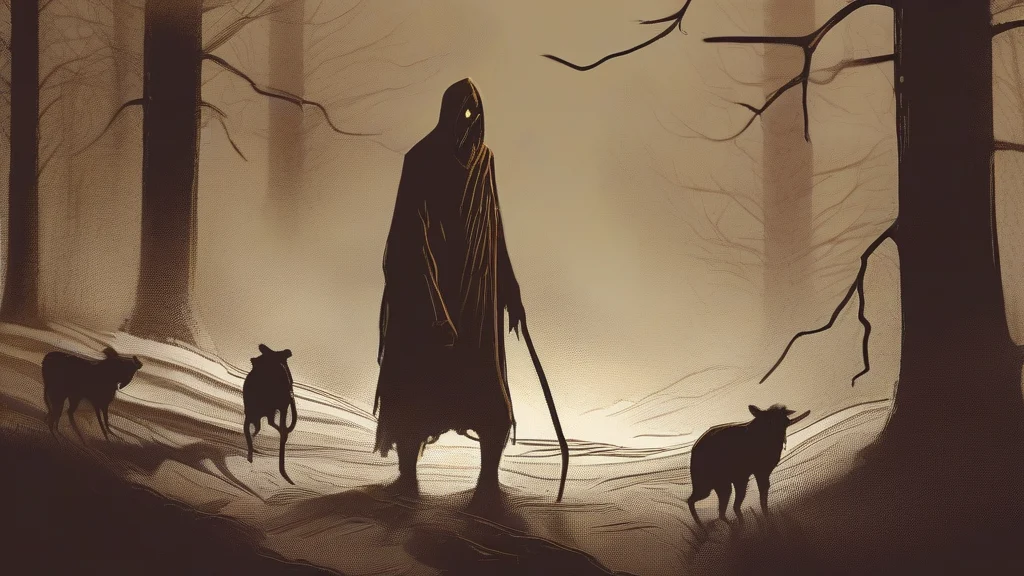
A bogle is a ghost, goblin, or mischievous frightening spirit drawn from Scottish and Northern English folklore. The word entered literature through writers such as Robert Burns, whose poems feature bogles haunting graveyards and moors, and it remains strongly tied to its regional origins. In everyday use today, bogle is uncommon and carries an old-fashioned, literary quality, appearing mainly in discussions of folklore or in historical fiction. It also developed a figurative sense: a 'bogle' can describe an abstract object of persistent fear or dread — for example, 'the bogle of unemployment' haunted postwar political debate. This figurative usage is largely British and somewhat dated. Closely related terms include bogey, bugbear, and bugaboo, all members of the same family of words for imaginary terrors. For readers interested in the vocabulary of superstition and folk belief, bogle is a vivid example of how cultures name the things they fear most in the dark.
nounA bogle is a ghost, goblin, or other frightening supernatural creature in Scottish and Northern English folklore. In modern usage it can also mean a source of persistent fear or anxiety.
- A ghost, goblin, or frightening spirit of Scottish and Northern English folklore.
- (Figurative or dated) An object of groundless or persistent fear or dread.
"The children dared one another to walk past the ruined mill after dark, certain that a bogle haunted its broken walls."
"Grandfather swore the old quarry was haunted by a bogle that lured travelers off the path."
"For years the threat of bankruptcy was the bogle that kept him working seven days a week."
Regular plural; often used when speaking of several spirits collectively, as in folk tales describing the bogles that haunt a district.
"Burns's Tam o' Shanter flees through the churchyard amid a whole crowd of bogles and warlocks."
Before there was the bogeyman under your bed, Scottish children feared the 'bogle' — the same family of frightful spirits that gave English words like 'bugbear' and even 'bug' their spooky roots.
Reviewed by Deb Chak, Editor. AI-assisted content curated by RJS Tech Solutions LLP.
Etymology of bogle
Bogle comes from Scots, likely as a diminutive variant of older words for a frightening specter such as 'bogill,' and it is part of the same Germanic word-family that produced 'bogey' and 'bugbear.' These terms all trace back to Middle English words denoting a terrifying apparition or hobgoblin. The word is well established in Scottish literary tradition through poets like Robert Burns, and by extension it influenced the broader family of English 'bug-words' for imaginary fears.
How bogle is actually used
Bogle is chiefly associated with Scottish folklore and carries a literary, somewhat archaic flavor in modern English. Robert Burns used bogles in his poetry, which helped fix the word in the literary tradition. The figurative sense — a bogle as a metaphorical object of dread, especially economic or political fears — appears mostly in British writing and has a slightly dated register.
Easily confused with bogle
Bogey (or bogy) is the standard English word for an evil spirit or source of dread, while bogle is the specifically Scottish form of essentially the same idea.
To ogle is to stare at someone in a flirtatious or rude way — a verb of human behavior — whereas a bogle is a supernatural creature.