What does boiserie mean?
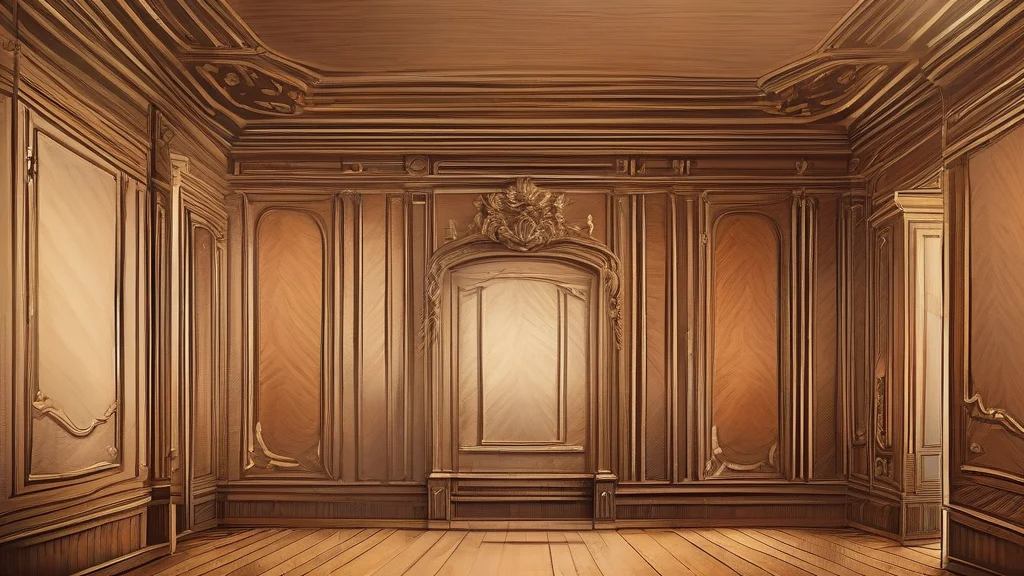
Boiserie refers to ornamental carved wood panelling that covers the walls of an interior, reaching its height of refinement in France during the seventeenth and eighteenth centuries. Typically painted, often in soft greens, blues, or greys, and frequently embellished with gilding, boiserie may incorporate frames for mirrors and paintings, pilasters, cornices, and motifs such as garlands, scrolls, and foliage. The term entered English from French, where it derives from 'bois', meaning wood, and it remains largely confined to architectural and design vocabulary rather than everyday speech. In contemporary usage it signals prestige and historical sophistication: estate agents and designers invoke it to describe panelled drawing rooms in grand European houses, and antique boiserie panels are prized at auction. Because the word denotes both the physical panelling and, by extension, the craft of producing it, it serves as a precise term of art for anyone describing historic or high-end interiors.
nounOrnately carved and often gilded wood panelling used to decorate the walls of a room, especially in the style of 17th- and 18th-century French interior design.
- Decorative carved wood panelling covering interior walls, characteristic of French 17th- and 18th-century interiors.
- The craft or art of producing such panelling.
"The dining room's original boiserie, with its garlands and gilt accents, had survived two centuries untouched."
"The salon was lined with pale blue boiserie picked out in gold leaf."
"Collectors paid record prices when a set of Louis XV boiserie panels came to auction."
Rarely used; occasionally seen in art-historical or auction contexts to refer to individual panels or distinct sets of panelling.
"The château's boiseries were dispersed among several private collections."
The word 'boiserie' literally means 'wood-work' in French — so those sumptuous carved palace walls are, at root, just very fancy 'tree'.
Reviewed by Deb Chak, Editor. AI-assisted content curated by RJS Tech Solutions LLP.
Etymology of boiserie
Boiserie comes directly from French, formed from 'bois' ('wood') with the '-erie' suffix that denotes a practice, craft, or product associated with the base word. The French 'bois' descends from Late Latin 'boscus' (or Vulgar Latin '*boscum'), meaning woodland, which also yields Spanish 'bosque' and Italian 'bosco', and is related to English 'forest' through Frankish influence on Latin vocabulary. The term entered English in the nineteenth century as collectors and architects documented French interiors, retaining its French pronunciation.
How boiserie is actually used
Boiserie is a mass noun borrowed from French and is typically used in uncountable form; it appears almost exclusively in formal contexts — interior design, architecture, and art-history writing — and carries connotations of luxury, antiquity, and continental elegance.
Easily confused with boiserie
A brasserie is an informal French restaurant, while boiserie is decorative carved wood panelling; they merely share the French '-erie' suffix.