What does bosket mean?
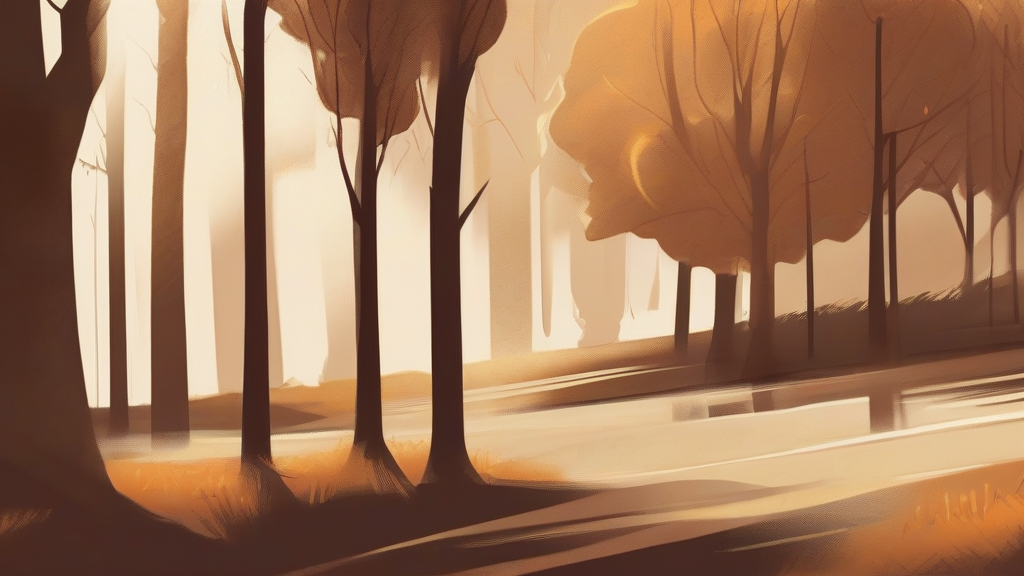
A bosket is a small grove or thicket of trees — a compact, often deliberately planted clump that provides shade, enclosure, or ornament within a larger landscape. The word appears most frequently in descriptions of formal gardens and parks, where boskets were arranged along walks or used as leafy rooms within geometric planting schemes. It is closely related to, and often interchangeable with, the French-derived 'bosquet', which is now the more common spelling in garden-design writing. Bosket carries a refined, slightly archaic connotation: it evokes manicured avenues, hidden fountains, and the ordered greenery of European estate gardens rather than wild woodland. Though uncommon in everyday speech, it is a precise and evocative term for anyone interested in garden history, landscape architecture, or descriptive nature writing. For readers encountering it for the first time, 'a small ornamental grove' captures its essential meaning, while 'thicket' covers its looser, wilder applications.
A small grove or thicket of trees, particularly one planted ornamentally in a garden or park.
"The duke's gardener had trained the bosket's elms into a cool green tunnel beside the orangery."
Often used interchangeably with 'bosquet'; chiefly found in literary and horticultural contexts.
More loosely, any dense clump of shrubs or small trees forming natural cover.
"Birdwatchers waited quietly at the edge of the bosket where the warblers nested."
The standard plural adds -s; it refers to multiple small groves, as in descriptions of extensive formal gardens.
"Long alleys of clipped linden divided the grounds into a series of shaded boskets."
A 'bosket' sounds like a basket full of greenery — and etymologically it almost is: both trace back to the same ancient root for wood and trees.
Reviewed by Deb Chak, Editor. AI-assisted content curated by RJS Tech Solutions LLP.
Etymology of bosket
Bosket derives ultimately from the medieval Latin 'boscus', meaning a wood, which also gave rise to Old French 'bos'/'bois' and Italian 'bosco'. The word entered English by way of the Italian diminutive 'boschetto' ('little wood') and its French counterpart 'bosquet', adopted during the seventeenth century when Italian and French formal garden styles were fashionable among English designers and landowners. It shares this deep root with related terms such as 'bosk', 'bosky', and 'boscage', all denoting small woods or brushy growth.
How bosket is actually used
Bosket is rare and literary, appearing mostly in garden history, landscape design writing, and descriptive prose. It is a variant form of the more common 'bosquet' (borrowed from French); writers may use either, but 'bosquet' predominates in modern usage. The plural is typically 'boskets'.
Easily confused with bosket
A basket is a woven container, while a bosket is a small grove or thicket of trees — the words merely sound similar.
Bosque is the Spanish word for a woodland or grove (used in place names in the American Southwest), whereas bosket is the English noun for a small ornamental grove.