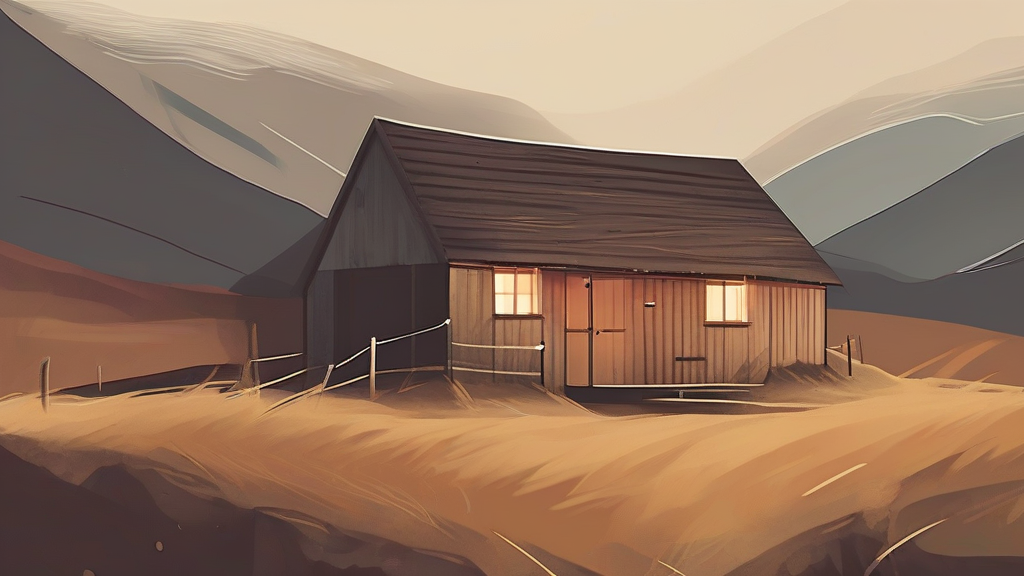
What does bothy mean?
A bothy is a small, rudimentary hut or cottage, most closely associated with Scotland and northern England, where it historically served as lodging for unmarried farm servants and estate labourers. The word conjures images of bare stone walls, a peat fire, and little else — shelter without comfort. In modern usage the term has broadened to describe simple, often unlocked shelters kept in remote upland areas for the use of walkers and climbers, many maintained by volunteer groups such as the Mountain Bothies Association. Because of this, 'bothy' has become a beloved word in British hillwalking culture, carrying connotations of self-reliance, camaraderie, and rugged landscape. It remains a regional term: familiar to anyone who walks the Scottish hills, but likely to require explanation elsewhere in the English-speaking world.
nounA small hut or cottage, especially one providing basic lodging for farm labourers or estate workers in Scotland and northern England.
- A basic hut or cottage used as lodging by farm or estate workers in Scotland and northern England.
- (By extension) any simple unlocked shelter in remote countryside available to walkers.
"The shepherds spent the night in a stone bothy high on the hillside before continuing their rounds at dawn."
"After a long day on the estate, the labourers returned to the cold comfort of the bothy."
"The Mountain Bothies Association maintains dozens of remote shelters across the Scottish Highlands."
Standard plural, formed by adding -es. Commonly used when referring collectively to the network of shelters maintained for walkers.
"The Highlands are dotted with bothies that offer free refuge to passing hikers."
Scotland's mountain bothies sit unlocked and free for any weary walker — a centuries-old tradition of open shelter that still survives today.
Reviewed by Deb Chak, Editor. AI-assisted content curated by RJS Tech Solutions LLP.
Etymology of bothy
The word 'bothy' first appeared in English in the early eighteenth century, though its origins are older. It derives ultimately from the Old Norse noun bóð, meaning a small dwelling or booth, which also gave English the word 'booth'. Scots and Scottish Gaelic preserved the sense of a humble shelter, with Gaelic bothan being a close cognate meaning a hut or shieling hut. The term became firmly established in Scots usage to denote accommodation provided for farm labourers.
How bothy is actually used
The word carries a distinctly Scottish flavour and evokes rustic simplicity and hard rural life. It is well known among hillwalkers through organisations like the Mountain Bothies Association, but may be unfamiliar to speakers outside Britain.
Easily confused with bothy
A booth is an enclosed stall or small structure such as a market stall or phone booth, whereas a bothy is specifically a rough dwelling used by rural workers in Scotland and northern England.