What does brownfield mean?
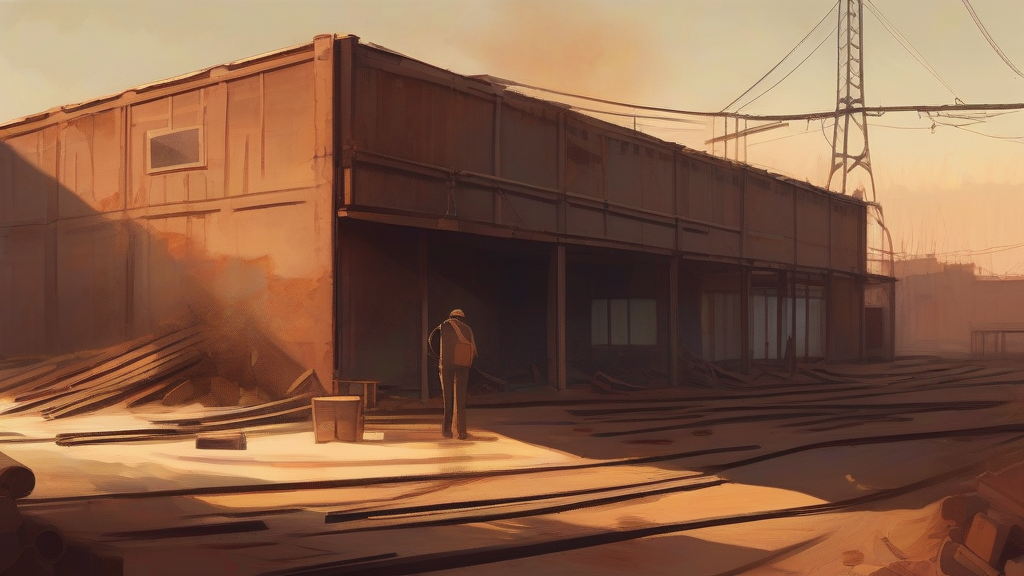
A brownfield is a tract of land that has been previously developed — usually for industrial or commercial purposes — and now stands vacant, derelict, or underused. Such sites are frequently found in older urban areas and may be contaminated by the residues of their former activities, such as factories, gasworks, or railways, meaning they often require costly environmental assessment and cleanup before they can be safely reused. The word exists chiefly in contrast to its opposite, 'greenfield,' which describes pristine land that has never been built upon. Brownfield is used most commonly as an adjective in phrases like 'brownfield site' or 'brownfield redevelopment,' and the term dominates discussions among planners, developers, and policymakers who argue that building on brownfields protects countryside from sprawl while regenerating neglected neighbourhoods. Because it evokes both blight and opportunity, the word carries a distinctly professional tone, appearing mainly in property, environmental, and governmental writing rather than casual conversation.
nounA brownfield is a parcel of previously developed land, typically in an urban area, that is vacant, derelict, or underused and may be contaminated by past industrial activity. It stands in contrast to greenfield land, which has never been built on.
- Land in an urban area that has been previously developed — especially for industrial or commercial use — and is now vacant, derelict, or underused, often requiring environmental remediation before reuse.
"The city transformed the old steelworks site into a thriving residential quarter, proving the value of redeveloping brownfields."
"Regulators offered tax incentives to encourage developers to clean up and build on brownfield sites rather than paving over farmland."
"Much of the city's new housing is being squeezed onto brownfields left behind by the decline of heavy industry."
The plural is common when referring to multiple such sites collectively, though the singular attributive form 'brownfield site' remains the most frequent pattern overall.
"Decades of industrial decline have left the region dotted with brownfields awaiting cleanup."
The name isn't about dirt — it was coined by urban planners simply as the opposite of 'greenfield,' and it now sits at the heart of debates over how cities should grow.
Reviewed by Deb Chak, Editor. AI-assisted content curated by RJS Tech Solutions LLP.
Etymology of brownfield
The term arose in twentieth-century English, formed transparently from the words 'brown' and 'field.' It emerged in the language of urban planning and land-use policy, coined as a deliberate counterpart to the older expression 'greenfield' (land never built upon), with the colour terms serving as simple metaphors for built-over versus untouched ground. Because it is a modern compound of two native English words rather than a borrowing from Latin or Greek, it has no classical cognates; its closest relatives are simply other compounds ending in '-field', such as 'greenfield' itself.
How brownfield is actually used
The term is chiefly used in town planning, property development, environmental policy, and government contexts, so it carries a technical or professional register rather than everyday usage. In British planning law, 'brownfield' is often treated as shorthand for 'previously developed land' as formally defined; in the United States it carries strong connotations of possible contamination and federal or state cleanup programs. The word is almost always attributive ('brownfield site'), with the bare plural 'brownfields' also common.
Easily confused with brownfield
A greenfield is undeveloped land never previously built upon, whereas a brownfield has been developed before and often requires cleanup or remediation.
A greyfield refers to developed but economically obsolete sites such as aging retail parks or empty parking lots, generally without the contamination associated with a brownfield.