
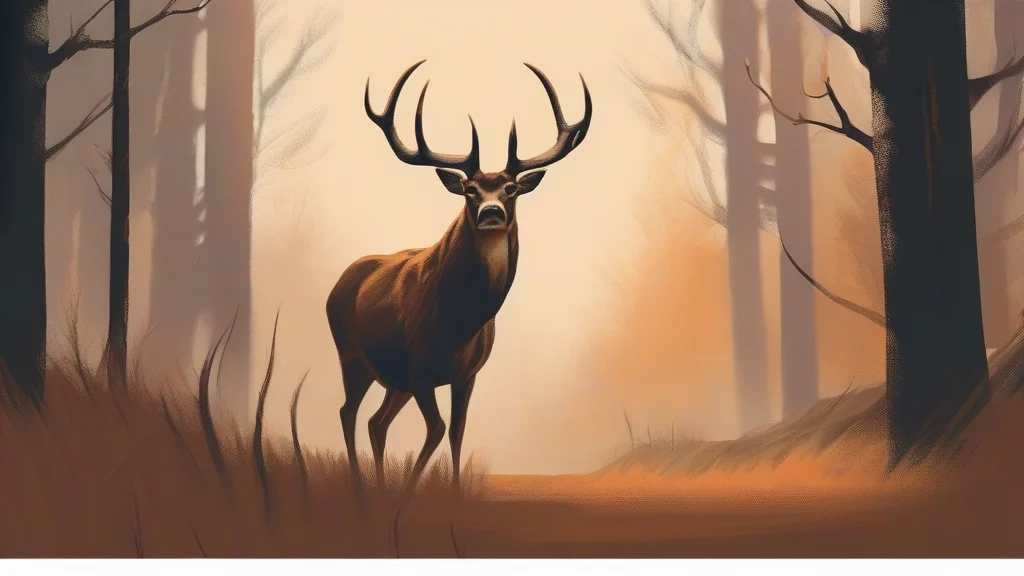
What does buckhorn mean?
Buckhorn is a noun referring to the horn or antler of a male deer, particularly when the material has been worked into useful objects. Historically valued for its strength, durability, and attractive grain, buckhorn was widely used for knife and razor handles, gun grips, combs, buttons, and other small wares, especially in Europe and North America before modern plastics took over. The word carries a rustic, old-fashioned flavor and appears most often today in descriptions of antique tools, frontier-era artifacts, and handcrafted goods. By extension, buckhorn also names certain plants — most notably buckhorn plantain — whose branched or antler-like features reminded people of a stag's horns. Whether evoking a well-worn hunting knife or a wayside weed, buckhorn connects everyday language to a long tradition of craftsmanship and close observation of the natural world.
The horn or antler of a male deer, especially as a material used for making handles and other objects.
"The collector prized the Bowie knife for its original buckhorn hilt."
Typically used attributively, as in 'buckhorn handle' or 'buckhorn grip.'
Any of several plants, such as buckhorn plantain, named for their resemblance to a buck's antlers.
"She pulled buckhorn weeds from the edge of the garden path."
Usually found in fixed plant names rather than standing alone.
The plural is rare; the word most often appears uncounted or in fixed phrases like 'buckhorn handle.'
"Both rifles featured carved buckhorns as decorative grips."
Before plastic existed, frontiersmen prized buckhorn so much that a fine knife wasn't complete without a handle carved from it.
Reviewed by Deb Chak, Editor. AI-assisted content curated by RJS Tech Solutions LLP.
Etymology of buckhorn
Buckhorn is a straightforward English compound of 'buck,' meaning a male deer, which derives from Old English 'bucc' (related to German 'Bock'), and 'horn,' from Old English 'horn,' which traces back through Proto-Germanic to the same Indo-European root that gave Latin 'cornu.' The compound arose in Middle English, when deer products were common materials in daily life, and it later extended to plants resembling an antler in shape.
How buckhorn is actually used
Most often encountered today in reference to antique knives, firearms, and other implements with buckhorn handles, giving the word a rustic, traditional connotation. As a plant name it appears mainly in botanical or rural contexts.
Easily confused with buckhorn
Buckthorn is a thorny shrub or small tree, whereas buckhorn refers to a buck's horn or to plants named for a resemblance to one.