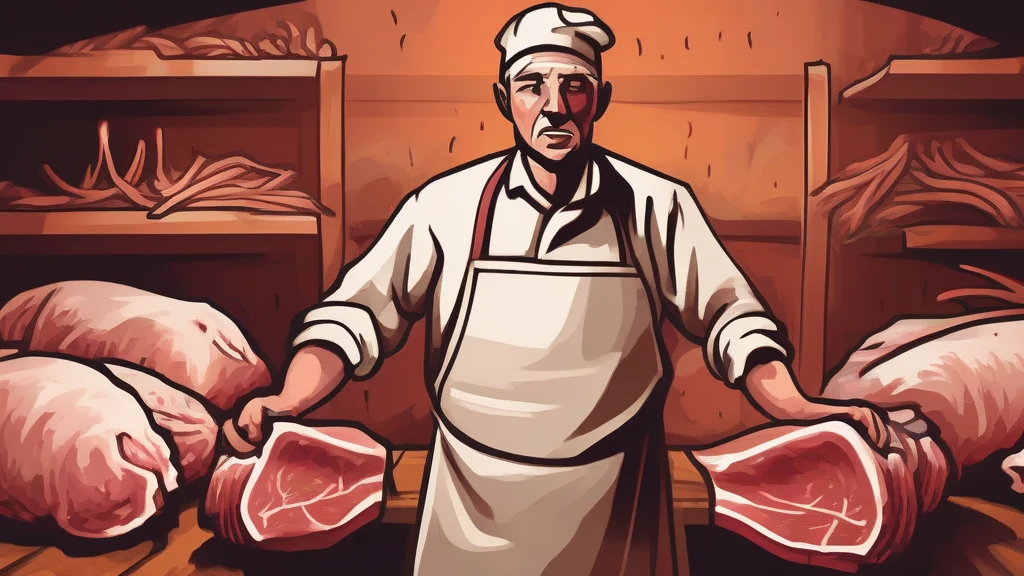
What does butchering mean?
Butchering refers first to the age-old trade and process of slaughtering animals and cutting their carcasses into meat, a skilled craft governed by long tradition and, today, by regulation. Because the image of hacking and dismemberment is so vivid, the word developed a powerful figurative life: to accuse someone of butchering a song, a speech, or a foreign language is to say they handled it with brutal incompetence, mangling it beyond recognition. In journalism and history the word also describes wholesale, savage killing, as in accounts of massacres. Literally neutral, figuratively damning, butchering sits comfortably in both everyday kitchen talk and heated cultural criticism, making it a vivid and versatile term for destruction carried out without skill or mercy.
noun (also the -ing form of the verb "butcher")The action or practice of slaughtering animals and cutting up their carcasses for meat; by extension, any brutal, clumsy, or incompetent destruction or maiming of something.
- The trade or activity of slaughtering animals and preparing their meat.
- Figurative use: the violent, indiscriminate, or incompetent ruining of something, such as a language, song, performance, or work of art.
"The butchering of hogs was once a familiar autumn ritual on American farms."
"Apprentice butchers learned the careful craft of butchering beef sides under a strict master."
"Critics complained that the film's dubbing amounted to butchering the original screenplay."
"Butchering" is normally an uncountable mass noun; the plural "butcherings" is uncommon and typically appears in historical writing describing repeated acts of slaughter.
"The chronicle records the butcherings committed during the sack of the city."
The word traces back to an old French word for a male goat — because the original butcher was, quite literally, a goat-slaughterer.
Reviewed by Deb Chak, Editor. AI-assisted content curated by RJS Tech Solutions LLP.
Etymology of butchering
Butchering comes from the verb "butcher," which entered Middle English from Anglo-Norman and Old French "bouchier" (modern French "boucher"), meaning a dealer in or slaughterer of meat. That French noun is generally traced to "bouc," meaning a male goat, so the original butcher was associated with goat meat. The agent noun gave rise to the verb, attested by around the early seventeenth century in its literal sense, and the present participle "butchering" naturally covers both the literal trade and the later figurative sense of violent or clumsy ruination.
Related word forms
How butchering is actually used
In its literal sense the word is neutral and professional; in figurative use it carries strong negative connotation, implying violence or gross incompetence rather than mere error. It is usually treated as uncountable.
Easily confused with butchering
"Butchery" is the closely related noun denoting the trade, place of slaughter, or an act of savage killing, while "butchering" more often names the ongoing action or process itself.
"Botching" means doing something clumsily or badly, whereas "butchering" implies violent, crude destruction — though figuratively the two overlap when someone ruins a performance or text.