What does byre mean?
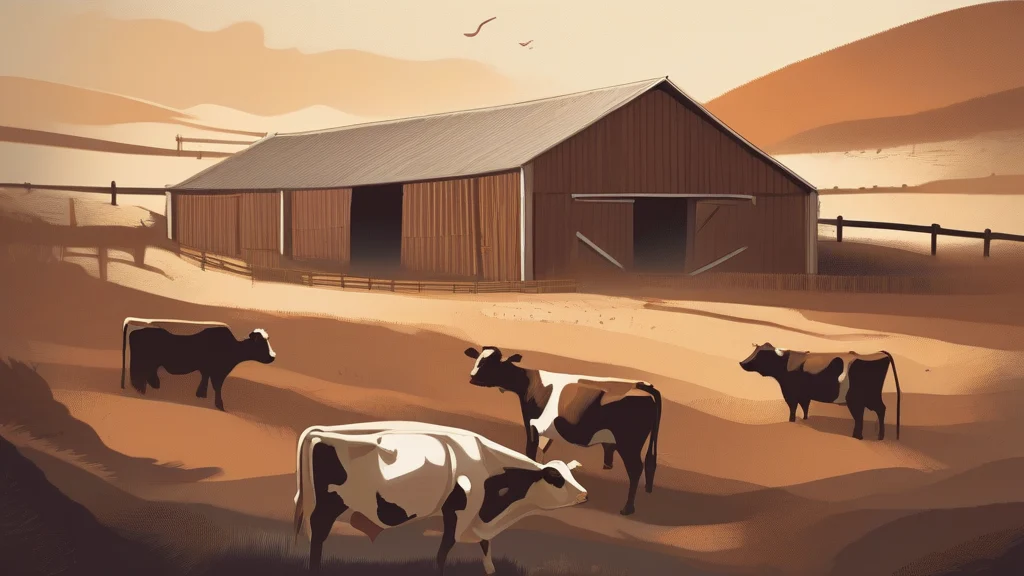
A byre is a farm building in which cattle are kept, particularly cows — whether for shelter during winter, for milking, or both. The word is essentially the British counterpart of the American 'cowshed' or 'barn', and it carries strong rural associations with Scotland and northern England, where it has long been part of everyday farming vocabulary. In literature and local speech, the byre evokes a distinctive sensory world: the smell of straw and livestock, the lowing of cattle at dusk, the rhythm of morning and evening milking. Although modern agriculture increasingly favours larger, more industrial structures, the word survives in place names, converted holiday cottages, and traditional farming communities. For readers outside Britain, encountering 'byre' usually signals either a rural British setting or an older text, making it a useful word for recognising regional English and appreciating its agricultural heritage.
nounA cowshed; a barn or outbuilding in which cattle are housed, especially one where cows are milked or kept over winter.
- A cowshed or barn for housing cattle, especially one used for milking cows.
"The cattle stood quietly in the dim byre while the farmer spread fresh straw."
"Mist rose off the fields as the herdsman opened the byre doors at dawn."
"They converted the derelict stone byre into a cosy holiday cottage."
Regular plural; used when referring to multiple such buildings, e.g. across a farm estate or village.
"Several of the old byres along the valley have been converted into barns for machinery."
This humble word for a cowshed arrived with the Vikings — it comes straight from the Old Norse 'búr', the same root that gave us 'bower'.
Reviewed by Deb Chak, Editor. AI-assisted content curated by RJS Tech Solutions LLP.
Etymology of byre
The word 'byre' derives from the Old Norse 'búr', meaning a storehouse or dwelling chamber, carried to Britain by Scandinavian settlers during the Viking Age. It took root especially in northern England and Scotland, where Norse influence on vocabulary was strongest. It is ultimately related to the same Germanic root that produced 'bower', reflecting an ancient association between buildings and dwelling or storage.
How byre is actually used
Chiefly British and largely regional — most strongly associated with Scotland, northern England, and rural farming communities. Elsewhere, 'cowshed' or 'barn' is the usual term.
Easily confused with byre
A buyer is someone who purchases goods, whereas a byre is a farm building that shelters cattle.