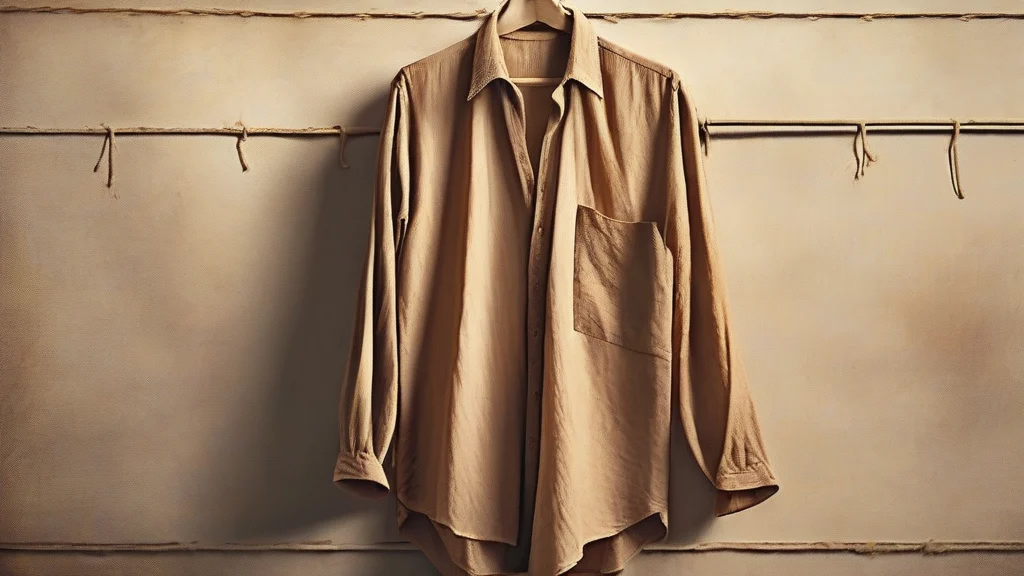
What does camise mean?
A camise is a loose-fitting shirt or smock, most familiar as an article of historical European dress. Worn by men as an everyday underlayer beneath doublets, jerkins, or armour, it was usually made of linen so it could be washed frequently while outer garments stayed clean. The word belongs to the same family as chemise and camisole, all tracing back through Romance languages to a Latin term for a shirt-like garment. Today camise is rare outside historical fiction, museum catalogues, and costume scholarship, where precision about period clothing matters. It denotes a simple, unshaped garment — collarless or with a modest neckline, often gathered at the neck and cuffs. For readers of older texts, encountering camise usually signals everyday domestic life rather than finery: it was the working layer of clothing, close to the skin, and among the most widely worn garments of its era.
nounA camise is a loose-fitting shirt or smock, typically worn as an undergarment or simple garment, especially one of linen worn by men in earlier centuries.
- A loose-fitting shirt or undergarment, historically worn by men, typically of linen.
"The museum display showed a plain linen camise of the kind a seventeenth-century labourer might have worn beneath his doublet."
"He stripped off his doublet and stood in his sweat-stained camise, sleeves rolled to the elbow."
"The tailor cut each camise from a single length of fine linen, leaving the seams generous for ease of movement."
Standard regular plural, used when referring to multiple garments, e.g. in inventories or costume collections.
"The laundress kept a stack of fresh camises ready for the household."
Before buttons and fitted shirts took over, men wore the camise — the humble ancestor of today's dress shirt, and cousin of the chemise still sold in lingerie departments.
Reviewed by Deb Chak, Editor. AI-assisted content curated by RJS Tech Solutions LLP.
Etymology of camise
Camise entered English in the sixteenth century from French camise, borrowed in turn from Italian camicia or directly from Old Spanish camisa, meaning shirt. The Romance forms descend ultimately from Latin camisia, a word for a shirt or nightclothing whose further origin remains debated. English also acquired the related chemise and later camisole from the same root, making these terms siblings rather than derivatives of one another.
How camise is actually used
The word is largely historical or literary today, appearing mainly in costume descriptions, historical fiction, and discussions of early modern dress. It carries no strong connotation beyond its period flavour, though it can sound archaic or scholarly in ordinary conversation.
Easily confused with camise
A chemise is the closely related woman's loose undergarment or slip that survives in modern usage, while a camise refers chiefly to the older man's shirt or smock.
A camisole is a modern woman's sleeveless undergarment or top, whereas a camise is a historical loose shirt or smock.