
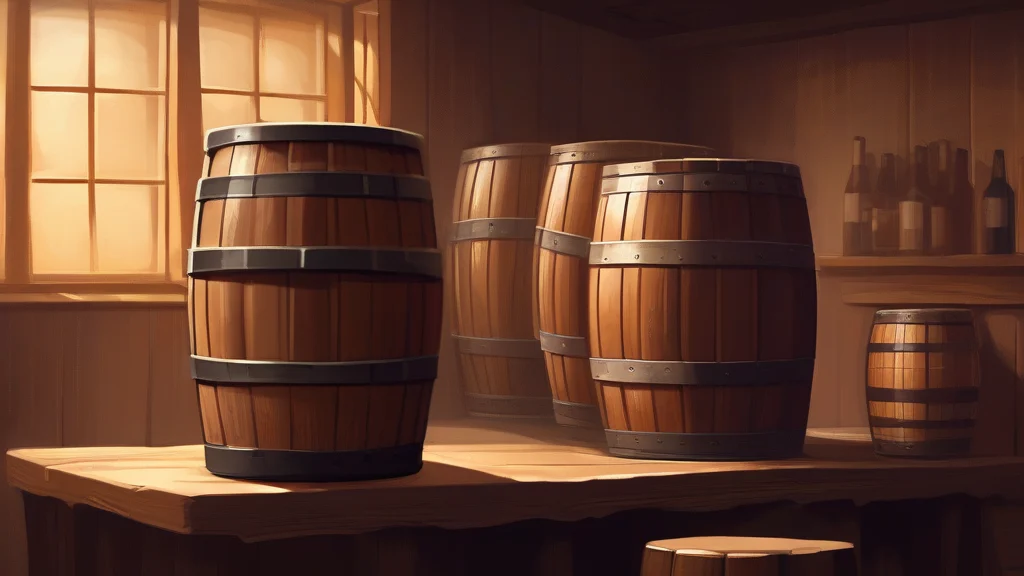
What does cask mean?
A cask is a large container, traditionally made of shaped wooden staves bound together with hoops, used to store, transport, and age liquids such as wine, beer, spirits, and historically water or other provisions. Unlike the more general word barrel, cask strongly suggests wooden craftsmanship and the process of maturation, which is why it dominates the vocabulary of winemaking, whisky production, and traditional British ale. In brewing, cask ale refers to unpasteurized beer conditioned and served directly from the cask, while in the spirits trade cask strength describes whisky bottled without dilution. By extension, cask can denote the quantity a container holds. The word lends any sentence a tone of tradition, quality, and artisanal care, making it valuable in both everyday and specialist writing about drink.
A large barrel-shaped container, usually of wood, used for storing and aging liquids such as wine, beer, or spirits.
"Rows of oak casks lined the cellar, each holding wine slowly developing character over the years."
In modern usage, especially British English, cask also appears in compounds such as cask ale and cask strength, where it signals traditional production methods.
To put or pack something into a cask or casks.
"They casked the cider immediately after pressing so it could ferment slowly through winter."
Standard plural; used when referring to multiple containers or quantities.
"The ship's hold was stacked with casks bound for the colonies."
The word 'cask' shares its ancient root with 'cascade' — both trace back to a Latin word for a drinking cup, which eventually gave us everything from wine barrels to waterfalls.
Reviewed by Deb Chak, Editor. AI-assisted content curated by RJS Tech Solutions LLP.
Etymology of cask
Cask entered Middle English in the late fifteenth century, borrowed either directly from Spanish casco or through Old French casque, meaning a helmet or vessel. These Romance forms ultimately derive from Latin capsa, a box or case, sharing a root with words like cascade (via Italian cascata) and case. Its earliest recorded English uses appear in maritime contexts, referring to containers shipped aboard vessels.
Related word forms
How cask is actually used
Cask carries connotations of traditional craftsmanship and quality, particularly in the context of wine, whisky, and real ale; it often appears in marketing language ('cask strength', 'single cask') to signal authenticity. It is more specific than the general word barrel, implying wooden construction and use for aging. The word is common in British English, especially regarding ale served from a cask ('cask ale').
Easily confused with cask
A flask is a small, flat bottle for carrying liquor in a pocket, while a cask is a large barrel-sized container for storing bulk liquids.
A keg is a small metal (or formerly wooden) barrel of fixed size, typically for beer, whereas a cask is traditionally a larger wooden vessel used for aging wine or spirits.