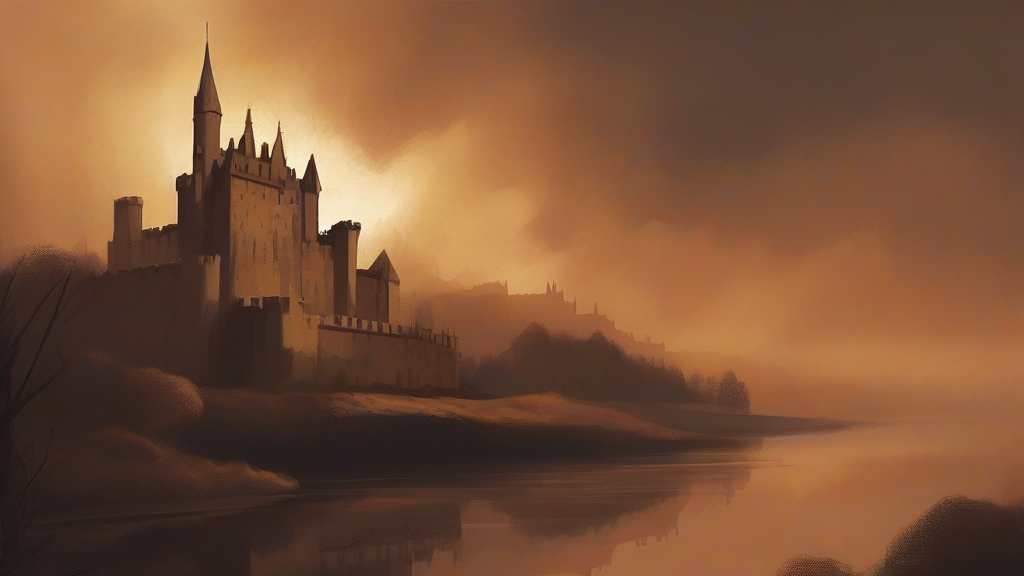
What does castle mean?
A castle is a large, fortified building or complex, typically constructed during the Middle Ages to serve simultaneously as a defensive stronghold and as a residence for kings, lords, and other nobility. Characterised by thick stone walls, towers, battlements, and often a surrounding moat, castles were centres of both military power and domestic life. Today the word evokes romance and heritage: thousands survive across Europe and beyond, drawing tourists and inspiring fairy-tale imagery. Beyond its literal sense, 'castle' appears in well-established figurative uses — most famously 'a castle in the air', meaning an unrealistic dream or ambition. In chess, the term names the piece more formally called the rook. Derived ultimately from the Latin 'castellum', a small fort, the word entered English via Old Norman French and has remained central to the language's vocabulary of architecture, history, and imagination ever since.
nounA large fortified building or group of buildings with thick walls, battlements, and often a moat, historically serving as a stronghold for royalty or nobility; in chess, an informal term for the rook.
- A large fortified building or residence of a noble or monarch, typically from the medieval period.
- In chess, the piece also known as the rook.
- (In the phrase 'a castle in the air') A visionary plan or dream that is unlikely to be realized.
"The medieval castle loomed over the village, its stone towers silhouetned against the dusk sky."
"Tourists flock to Windsor Castle, one of the oldest occupied castles in Europe."
"She spent the whole afternoon building a sandcastle on the beach."
Regular plural formation by adding -s.
"Wales has more castles per square mile than almost any other country in Europe."
The word 'castle' comes from the Latin 'castellum', meaning a small fort — so every castle is, etymologically speaking, just a little fort that got carried away.
Reviewed by Deb Chak, Editor. AI-assisted content curated by RJS Tech Solutions LLP.
Etymology of castle
Castle derives from Latin 'castellum', a diminutive of 'castrum' meaning fort or fortified camp. It passed into English through Old Norman French 'castel' following the Norman Conquest of 1066, replacing the Old English terms for such structures. Related forms appear across Romance languages, including French 'château' and Spanish 'castillo'.
How castle is actually used
The word carries strong connotations of romance, history, and fairy tales in everyday use. The figurative phrase 'castle in the air' (or 'castles in Spain') denotes impractical daydreams. In chess, 'to castle' is also used as a verb describing a specific move involving the king and rook.
Easily confused with castle
A chateau is a French country house or estate, often grand but not primarily built as a military fortification, whereas a castle is fundamentally a fortified structure.