What does cavalier mean?
Cavalier functions today chiefly as an adjective meaning offhand, dismissive, or heedlessly casual — describing someone who treats serious matters with an arrogant lack of concern, as in 'a cavalier attitude toward safety'. This critical connotation is now far more common than the word's original meanings. As a noun, cavalier historically denoted a horseman or gallant mounted soldier, and most famously referred to the supporters of King Charles I who fought against the Roundheads (Parliamentarians) in the English Civil War of the seventeenth century. The word derives ultimately from the Latin caballarius, meaning horseman, via Italian cavaliere and French chevalier — the same root that gives us chivalry and cavalry. When you call someone cavalier, you are suggesting they are not merely careless but presumptuously so: they should have known better, yet brushed the matter aside as beneath their attention. It is a useful word for criticizing negligence laced with arrogance, particularly in discussions of corporate, political, or professional misconduct.
Showing an offhand, dismissive, or casually arrogant lack of concern for something important.
"The company displayed a cavalier disregard for its customers' data privacy."
Almost always pejorative; it suggests negligence combined with arrogance rather than mere oversight.
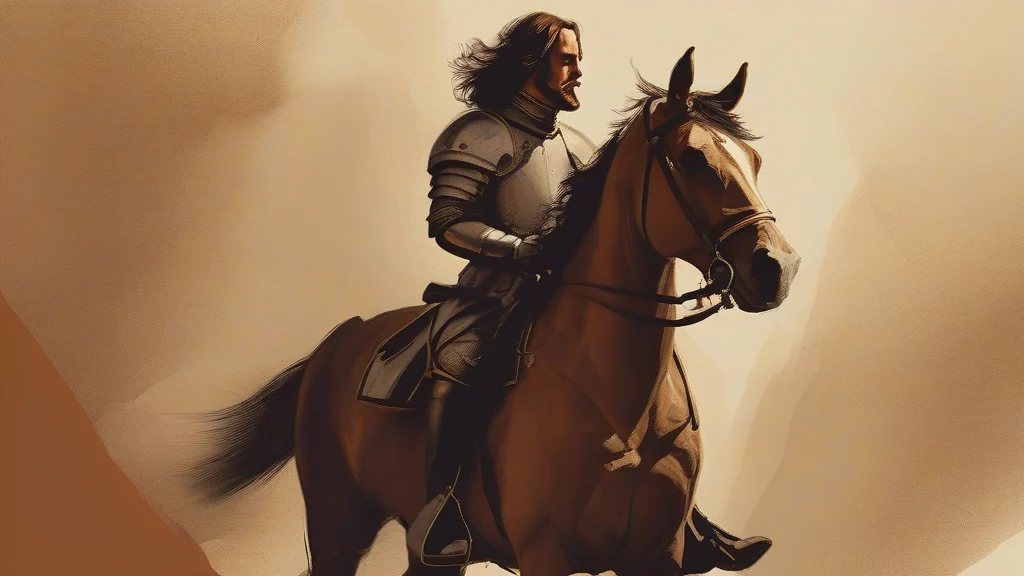
A horseman or mounted soldier, especially a gallant or courtly one.
"Portraits of the era show elegant gentlemen dressed as cavaliers, complete with feathered hats and flowing locks."
Now largely historical or literary in this sense.
Specifically, a supporter of King Charles I in the English Civil War, opposed to the Parliamentarian Roundheads.
"After the war ended, many Cavaliers fled into exile on the Continent."
Usually capitalized in this historical/political sense.
Regular plural; used for both the historical horseman/Royalist sense. The adjective does not inflect for number.
"The Cavaliers held out at Oxford long after the king's fortunes had faded elsewhere."
The English Civil War gave us two lasting words — 'Roundhead' for the Parliamentarians and 'Cavalier' for the royalists — but only one went on to describe anyone who shrugs off serious things with a swaggering wave.
Reviewed by Deb Chak, Editor. AI-assisted content curated by RJS Tech Solutions LLP.
Etymology of cavalier
Cavalier comes from the Italian cavaliere, meaning horseman or knight, which derives from Late Latin caballarius, from caballus (horse). The word entered English in the sixteenth century via French chevalier, sharing its ultimate origin with chivalry and cavalry. Its famous political sense arose during the English Civil War, when 'Cavaliers' was the name given to the Royalist supporters of Charles I, often implying dashing, aristocratic swagger. From this image of the carefree, haughty horseman, the adjective sense developed by the seventeenth century, describing an offhand and arrogantly unconcerned manner.
How cavalier is actually used
The adjective sense dominates modern usage and almost always carries negative connotation — it implies not just carelessness but an arrogant, entitled indifference to consequences or to other people's concerns. The noun senses are now largely historical or literary. In British English, the adjective is common in formal writing and journalism about institutional failures; American English uses it similarly but slightly less frequently.
Easily confused with cavalier
Chevalier is a French word for a knight (from 'cheval', horse), while cavalier is its English equivalent and is more commonly used today to mean dismissive or offhand in attitude.