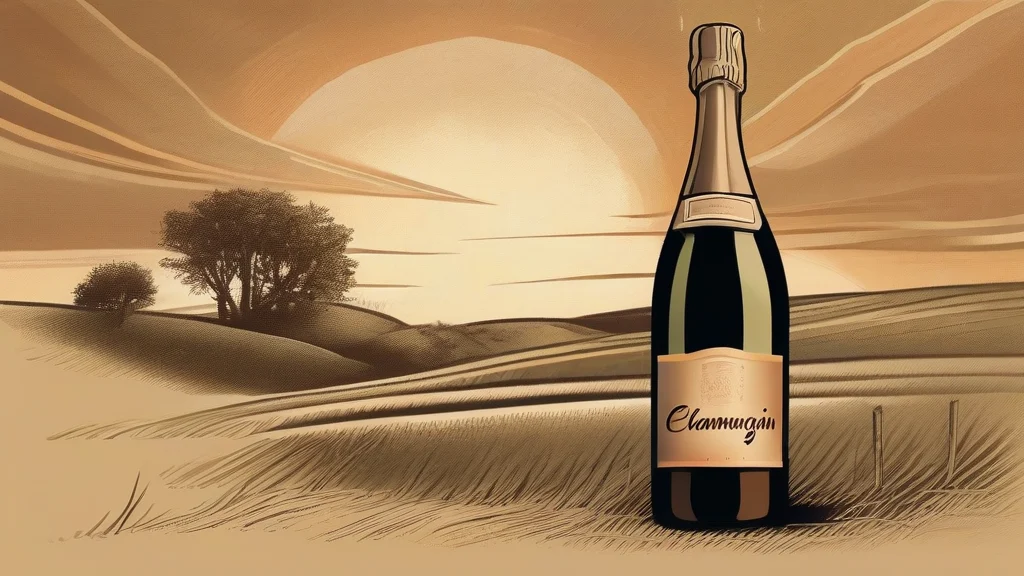
What does champaign mean?
Champaign is an archaic and literary English noun denoting level, open country — a broad expanse of flat land unbroken by forest or significant relief. It entered English through Old French from Late Latin campania, the same root that yields 'campus', 'champion', and 'campaign', all of which preserve the ancient association between open fields and military or civic life. The word flourished in the poetry and prose of the sixteenth and seventeenth centuries, where writers used it to set scenes of armies drawn up in formation or travelers crossing vast, unobstructed landscapes. Over time it fell out of everyday use, displaced by simpler words like 'plain'. Today it survives mainly in historical texts, poetic imitation, and as a place name, notably Champaign, Illinois. Its close visual resemblance to 'champagne' — the wine, which shares the same Latin ancestry via the French province — makes the two words a classic pair for confusion, distinguished only by a single vowel.
Level or open country; an extensive stretch of flat land.
"The cavalry swept across the open champaign at first light."
Archaic or literary; chiefly found in historical and poetic writing.
An obsolete or rare spelling of 'champagne', the sparkling white wine.
"The old inventory listed a case of champaign among the cellar's stores."
Historical spelling variant only; modern writing uses 'champagne'.
Rarely pluralized even in historical usage; when it occurs, the plural refers to multiple stretches of open country.
"The chronicle describes the champaigns of northern France as endless seas of wheat."
One misplaced letter separates the bubbly in your glass from the battlefield it once overlooked — poets used 'champaign' to mean wide-open country long before anyone thought of popping corks.
Reviewed by Deb Chak, Editor. AI-assisted content curated by RJS Tech Solutions LLP.
Etymology of champaign
Champaign comes from Middle English, borrowed from Old French champaigne, itself derived from Late Latin campania meaning 'level country', a word associated with the plains of Campania in Italy. It is thus a doublet of 'champagne', which traveled the same route but came to denote the French province and its famous wine. The same Latin root produced 'campaign', 'champion', and 'campus', all originally tied to open fields. The word was well established by the early modern period and gradually became archaic after the seventeenth century.
How champaign is actually used
Champaign belongs almost entirely to elevated or historical registers — it appears in Shakespeare, Milton, and other early modern writers, but is virtually absent from contemporary prose except in deliberately literary pastiche. It survives most visibly today as a proper noun (the city of Champaign, Illinois). Writers seeking a current term for flat open land would normally choose 'plain' or 'prairie'.
Easily confused with champaign
Champagne is the sparkling wine from the Champagne region of France, while champaign (with an 'i') is an archaic literary word meaning level open countryside.