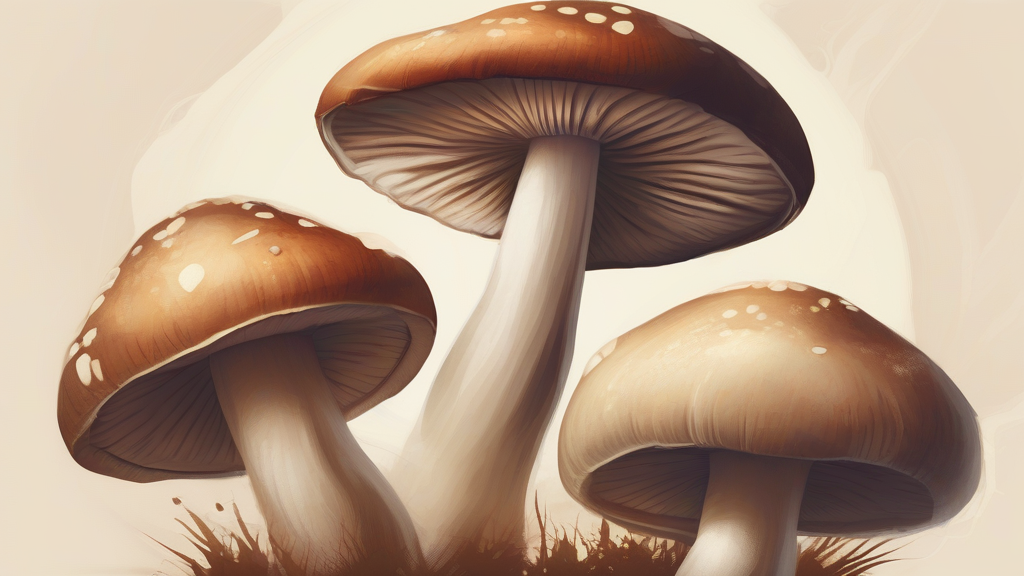
What does champignon mean?
Champignon is a noun referring to an edible mushroom, and in particular to the cultivated white or button mushroom known scientifically as Agaricus bisporus. Borrowed into English from French — where it is the ordinary word for mushroom — it carries a distinctly culinary, Continental air, appearing most often on restaurant menus, in recipes, and in food writing rather than in casual conversation. A dish described as containing champignons suggests European-style cooking: sautéed champignons in cream sauce, champignon soup, or mushrooms folded into an omelette are typical contexts. The word traces back through Old French to Late Latin campaniolus, meaning something that grows in the fields, sharing a distant root with words like campaign, champaign, and even champagne. For cooks and readers of menus, knowing champignon is useful precisely because it is the label under which the world's most widely eaten cultivated mushroom is so often marketed and served abroad.
nounAn edible mushroom; specifically, the cultivated white mushroom (Agaricus bisporus), especially in European usage.
- An edible mushroom, especially the cultivated white or button mushroom (Agaricus bisporus), used as a food item.
"The omelette was filled with sautéed champignons and fresh herbs."
"She garnished the steak with a medley of grilled champignons."
"The market stall sold fresh champignons by the kilo alongside wild porcini."
The standard plural adds -s, following normal English pluralization of the French loanword.
"He bought two punnets of champignons for the stew."
The humble white button mushroom on your pizza has a fancy name: in much of Europe it's simply called a 'champignon' — a word that shares its ancient roots with 'campaign' and even 'champagne.'
Reviewed by Deb Chak, Editor. AI-assisted content curated by RJS Tech Solutions LLP.
Etymology of champignon
Champignon entered English from French, likely in the early 17th century. It derives from Old French champignuel, from Late Latin campaniolus, a derivative of campus meaning "field" — literally a thing growing in open country. This same Latin root camp- ultimately gives English cognates such as champaign (an expanse of open land), campaign, and, via the Champagne region's chalky plains, champagne itself.
How champignon is actually used
"Champignon" is borrowed directly from French and retains a slightly continental, culinary flavor in English; it appears most often in menus, cookbooks, and food writing rather than everyday speech, where "mushroom" is the default term. The plural is typically anglicized as "champignons."
Easily confused with champignon
Champagne is a sparkling wine from France, while champignon is an edible mushroom — both derive ultimately from the same Latin root but refer to entirely different things.