
What does cheval mean?
'Cheval' is the French word for horse, borrowed into English where it survives almost entirely inside a handful of fixed phrases rather than as a free-standing noun. The best known are 'cheval de bataille', originally a warhorse but now figuratively a person's favourite theme or cherished project; 'cheval de frise', a defensive barrier of spiked timber named after the Frisians who reputedly devised it; and the 'cheval glass', a tall mirror mounted on pivots between two uprights. Because these expressions retain their Gallic form, using them signals literary polish and familiarity with military or decorative vocabulary. The root behind 'cheval' is Latin 'caballus', a late-Latin word for a workhorse, which also gave English 'cavalry', 'chivalry' and 'cavalier' via Old French 'chevalier', meaning knight. For readers, then, 'cheval' is less a common everyday term than a key that unlocks a small family of elegant, historically loaded English expressions.
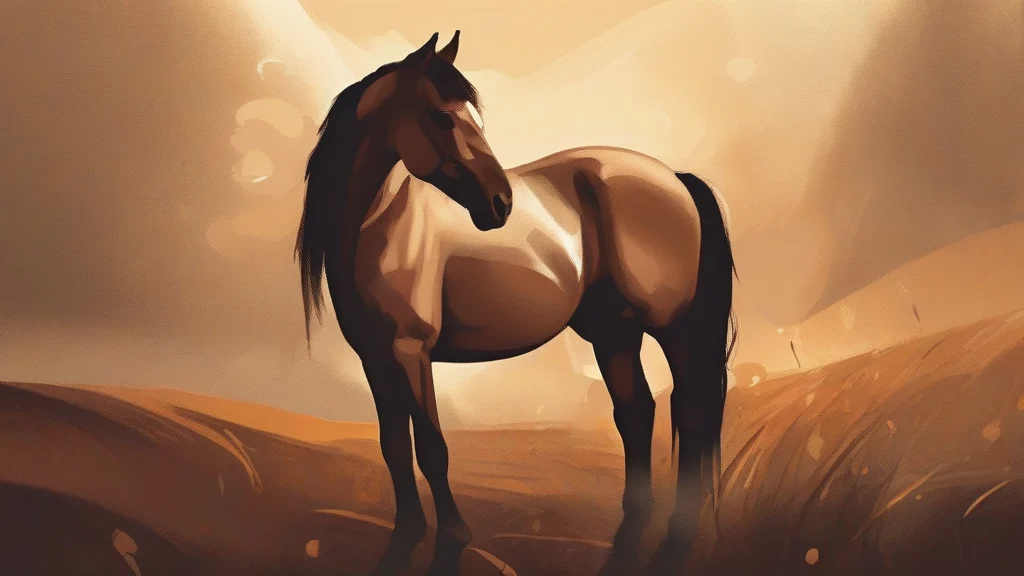
nounA horse; an English borrowing of the French word for horse, now chiefly encountered in fixed French phrases adopted into English such as 'cheval de bataille' and 'cheval de frise'.
- A horse (a direct borrowing of French cheval, now rare except in set phrases)
- In established French borrowings such as cheval de bataille (a favourite cause or subject), cheval de frise (an obstacle of spiked timbers), and cheval glass (a full-length tilting mirror)
"The general's memoirs dwell lovingly on his old cheval de bataille, the campaign that defined his career."
"The museum displays an antique cheval de frise salvaged from the fortress walls."
"Her cheval de bataille at every dinner party was the scandalous history of the estate."
When used in English within French phrases, the French plural 'chevaux' is standard, e.g. 'chevaux de frise'.
"The rampart bristled with chevaux de frise against any cavalry assault."
Every time you say 'cavalry' you're speaking French for horse — because English never quite got over its Norman conquest.
Reviewed by Deb Chak, Editor. AI-assisted content curated by RJS Tech Solutions LLP.
Etymology of cheval
'Cheval' comes from Old French 'cheval' (from Latin 'caballus'), meaning horse. English borrowed both the bare word and, more durably, a set of compound phrases from French military and domestic life, including 'cheval de bataille', 'cheval de frise' and 'cheval glass'. The same Latin root produced 'chevalier' (knight), from which derive 'chivalry', 'cavalier' and ultimately 'cavalry', making 'cheval' part of one of English's richest equine word families.
How cheval is actually used
On its own, 'cheval' is rare in English prose and reads as distinctly French; it is best reserved for the fixed borrowed phrases in which it survives. It carries a cultivated, somewhat literary flavour.
Easily confused with cheval
'Chevalier' means a knight or member of certain orders of merit, while 'cheval' simply denotes the animal itself — a horse.