What does cinder mean?
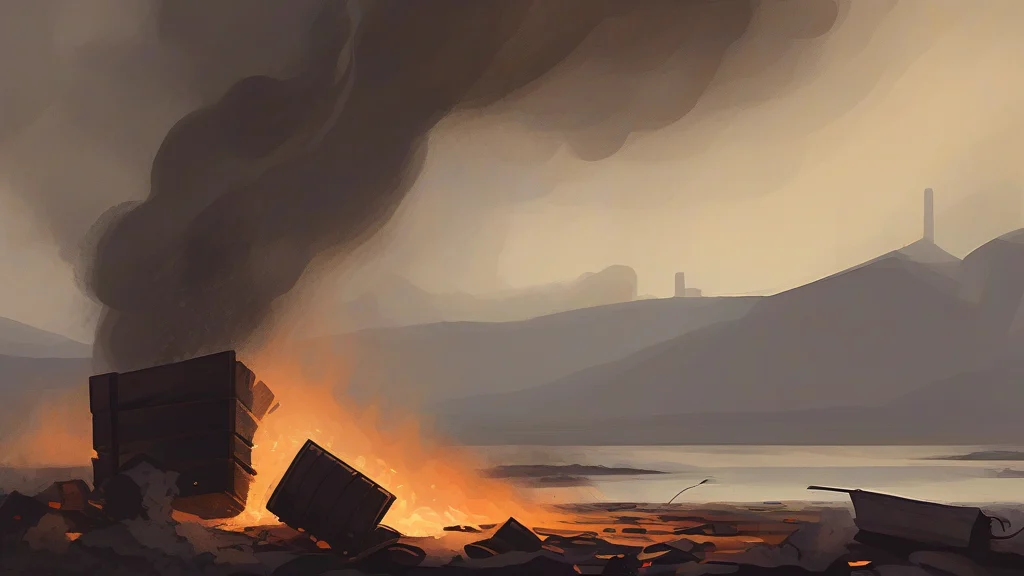
A cinder is a small, rough fragment of matter — usually coal, wood, or another fuel — that has been partly consumed by fire. Unlike an ember, which still glows and radiates heat, a cinder has largely finished burning: it is the charred, blackened remnant that survives once the flames die down. The word appears constantly in descriptions of fires, hearths, furnaces, and destroyed buildings ('the house was burnt to a cinder'), where it evokes both physical residue and emotional aftermath. It also forms several established compounds, including 'cinder block', the lightweight concrete building unit, and 'cinder track', the crushed-slag surface once standard on running tracks. Figuratively, 'reduced to cinders' suggests total ruin or destruction, giving the word a sombre, dramatic register. Derived ultimately from Old English through Germanic roots related to slag and sintered material, it shares distant ancestry with words like 'sinter'. Familiar from fairy tales — Cinderella takes her name from the hearth ashes she slept among — it remains a vivid, concrete term for what fire leaves behind.
A small fragment of burnt or partly burned matter, especially from coal, wood, or another combustible material; also figuratively, the ruined remains of something destroyed by fire.
"She raked the cold cinders out of the grate each morning before lighting a fresh fire."
Frequently used in the plural; singular use is common in compounds like 'a cinder block'.
To burn something until only cinders remain; to scorch or char severely.
"The intense heat cindered the edges of the document before anyone could rescue it."
Less common than the noun form; usually appears as 'cindered' or 'to be cindered' rather than as a frequent action verb.
Standard plural. In everyday British English the plural dominates ('a bucket of cinders'); in American English the singular appears more often, particularly in fixed compounds like 'cinder block' or 'cinder track'.
"The old railway line was ballasted with clinkers and cinders from the nearby foundry."
Cinderella's name literally means 'little ash girl' — she slept by the hearth among the cinders, and that sooty nickname stuck for centuries.
Reviewed by Deb Chak, Editor. AI-assisted content curated by RJS Tech Solutions LLP.
Etymology of cinder
The word 'cinder' derives from Middle English 'sinder', which came from Old English 'sinder', meaning slag or dross from metal-smelting — a sense preserved today in metallurgical terms like clinker and slag. It shares a Germanic root with the modern word 'sinter'. Over time the meaning broadened from furnace waste to include any fragment of partly burned fuel, and by the early modern period it was firmly associated with domestic fires and hearths.
Related word forms
How cinder is actually used
Mostly used in the plural in everyday British English (a heap of cinders); American English more often uses the singular. The figurative sense carries connotations of devastation and finality. 'Cinder block' and 'cinder track' are fixed compound terms in construction and athletics.
Easily confused with cinder
An ember is still burning and glowing with heat, while a cinder is already burnt out and no longer aflame.
Ash is the fine, powdery residue left after complete combustion, whereas a cinder is a coarser, chunkier piece of partly burned material.