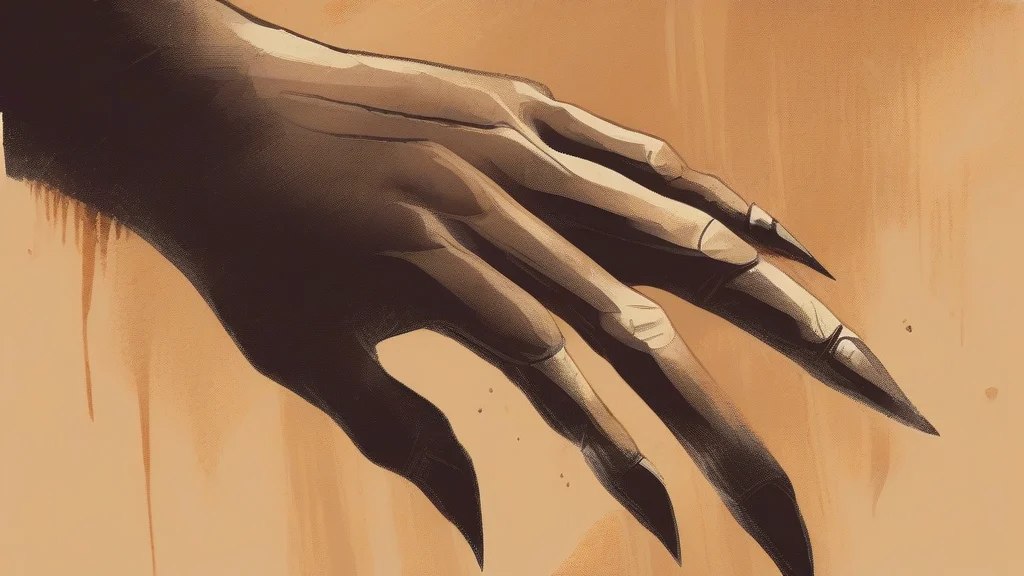
What does clawing mean?
"Clawing" is the present participle of the verb "to claw," meaning to scratch, tear, or pull at something using claws or fingernails. It describes both animal behaviour — a cat clawing at a scratching post — and human action, whether frantic (a climber clawing at loose rock) or habitual (a child clawing at a locked door). The word has also developed a strong figurative sense: people and organisations are said to be "clawing back" money, ground, or reputation, meaning they are struggling to regain what was lost. This extended use lends the word connotations of urgency, desperation, and hard-fought effort, making it a favourite in journalism and sports commentary. Derived ultimately from the Old English "clawu," it shares its history with everyday words for animal feet and grasping. Vivid and physical by nature, "clawing" is most effective when the writer wants readers to feel the strain and scrape of an effortful struggle rather than observe it calmly from a distance.
Scratching, tearing, or pulling at something with claws or fingernails; figuratively, struggling desperately to achieve or recover something.
"He was clawing at the ice, trying to stop himself from sliding into the ravine."
Almost always appears in progressive constructions; commonly paired with 'at' or 'one's way'.
The act or process of scratching or tearing with claws or nails.
"We woke to the steady clawing of the fox against the henhouse door."
Cats aren't just being destructive when they claw your sofa — they're shedding old nail sheaths and marking territory with scent glands in their paws.
Reviewed by Deb Chak, Editor. AI-assisted content curated by RJS Tech Solutions LLP.
Etymology of clawing
Clawing derives from the verb "claw," which comes from Old English "clawu," meaning a claw or hoof, a native Germanic word with cognates in other Germanic languages such as Dutch and German. The verb sense of tearing or scratching with claws is attested early in the language's history, and the present participle "clawing" follows the standard Old English -ing formation that survives unchanged in Modern English. The figurative sense of clawing one's way upward or back is a later development, reflecting the word's natural metaphorical extension from physical gripping to determined striving.
Related word forms
How clawing is actually used
Most often used in progressive verb constructions ('is clawing', 'was clawing'), frequently followed by 'at' or 'its way'. The figurative sense carries connotations of desperation and struggle, so it suits vivid, emotive writing rather than neutral description.
Easily confused with clawing
'Crawling' means moving on hands and knees or moving slowly, while 'clawing' specifically means scratching or tearing at something with claws or fingernails.