What does contrabass mean?
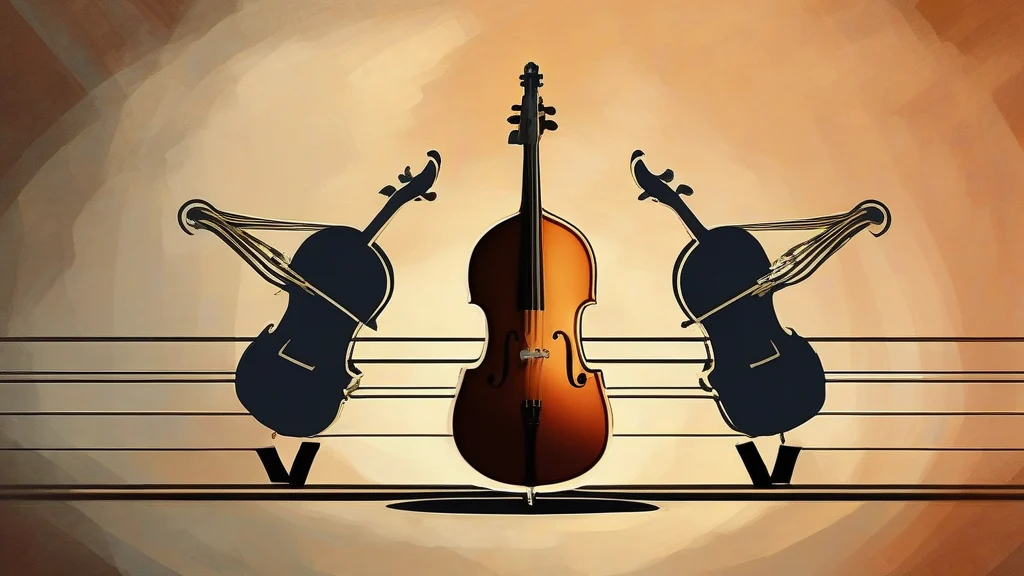
The contrabass — more commonly called the double bass — is the largest and lowest-sounding member of the violin family, standing around six feet tall and producing pitches an octave below the cello. It serves as the harmonic foundation of the orchestra's string section and is equally central to jazz, bluegrass, rockabilly, and other genres where it is often played pizzicato rather than bowed. The term also functions adjectivally to designate an octave-below variant of another instrument, as in contrabass clarinet or contrabass flute. Derived from Italian, the word combines the prefix 'contra-' (meaning 'against' or, musically, 'an octave below') with 'bass'. Musicians may call it the upright bass, string bass, or bass fiddle depending on genre, but whatever the label, its deep, resonant voice underpins virtually all Western ensemble music.
nounThe largest and lowest-pitched instrument of the violin family, also called the double bass; or, less commonly, the lowest-pitched instrument of other families, such as the contrabass clarinet. As an adjective, it denotes a pitch range an octave below the bass register.
- The largest and lowest member of the violin family, played with a bow or plucked (pizzicato), foundational in orchestral, jazz, and popular music.
- Any of several low-pitched instruments in other families whose name carries the prefix, such as the contrabass clarinet or contrabass flute.
- (Adjective) Designating a pitch or instrument sounding an octave below the normal bass range.
"She took up the contrabass at fourteen and now anchors the orchestra's string section."
"The composer wrote a demanding solo for contrabass in the second movement."
"He doubled on contrabass and electric bass throughout the recording session."
Standard plural when counting individual instruments; uncountable use is common when referring to the instrument as a general category or section.
"The symphony keeps two contrabasses on its permanent roster."
At nearly six feet tall, the contrabass is so big that players often stand — and it can hit notes so low you feel them in your chest before you hear them.
Reviewed by Deb Chak, Editor. AI-assisted content curated by RJS Tech Solutions LLP.
Etymology of contrabass
The word 'contrabass' comes from Italian 'contrabbasso', formed from the prefix 'contra-' ('against' or 'below') combined with 'basso' ('low'), reflecting the instrument's pitch lying below the ordinary bass register. It entered English usage in the early 19th century alongside the growth of orchestral terminology, though the instrument itself had evolved over earlier centuries from the viol and violin families. The same Italian prefix pattern produced related musical terms such as 'contrabassoon' and 'contralto'.
Related word forms
How contrabass is actually used
'Contrabass', 'double bass', 'string bass', 'upright bass', and 'bass fiddle' all refer to the same instrument; classical musicians tend to say 'double bass' or simply 'bass', while jazz and rock players often say 'upright' or 'acoustic bass'. The word also appears as a modifier naming octave-below variants of instruments (e.g. contrabass recorder). The plural is unchanged in form when referring to the instrument as a mass category, but 'contrabasses' is standard when counting individual instruments.
Easily confused with contrabass
A cello is a smaller, higher-pitched string instrument played seated between the knees, whereas the contrabass is larger, plays an octave lower, and is typically played standing or on a high stool.
The contrabassoon is a woodwind instrument sounding an octave below the bassoon, while 'contrabass' usually refers to the large bowed string instrument.