What does cowherd mean?
A cowherd is a person whose work is to tend, guard, and move cattle, typically guiding them to pasture, water, and shelter and watching over their safety. The word is a straightforward compound of 'cow' and 'herd', with the '-herd' suffix historically denoting one who keeps animals — the same element found in shepherd, swineherd, and oxherd. Cowherds have been central figures in agrarian societies for millennia, appearing in pastoral poetry, religious tradition (notably the cowherd associations of the god Krishna in Hinduism), and folk art. Today the term can sound slightly old-fashioned or literary next to modern occupational labels such as herdsman, stockman, or cowboy, but it remains the natural choice when describing traditional or pastoral cattle-tending. It should not be confused with 'coward', a word of entirely different meaning that happens to resemble it closely in spelling.
nounA person whose occupation is tending and herding cattle.
- A person employed or engaged to tend, guard, and drive cattle.
"The cowherd drove the cattle across the river to the summer pasture."
"At dawn the cowherd led his small herd out to graze on the open common."
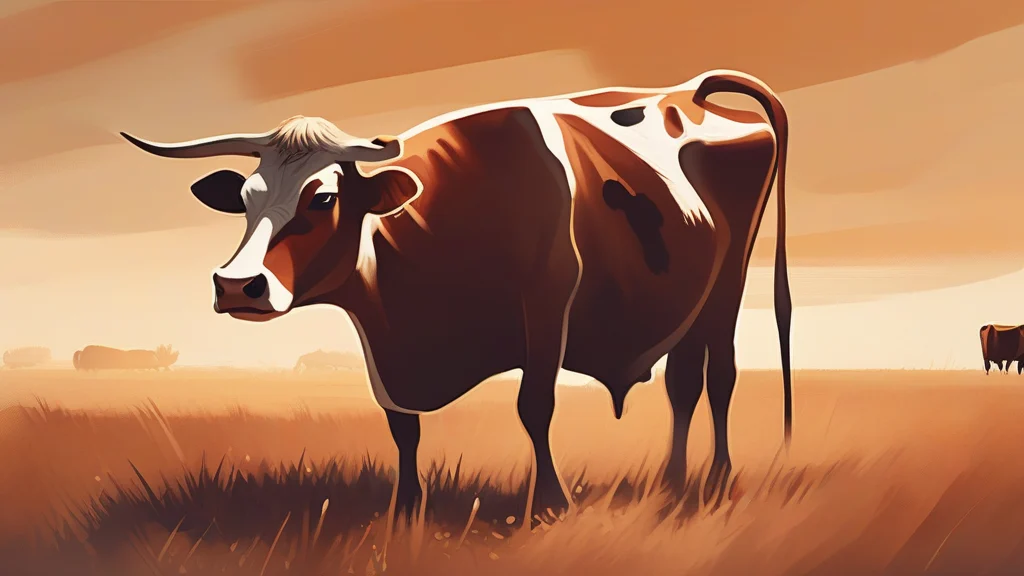
"In the painting, a lone cowherd watches over his cattle beneath a vast evening sky."
Standard plural, used when referring to multiple cattle-keepers.
"The village's cowherds gathered their cattle at the edge of the forest each morning."
Despite sounding like 'coward', a cowherd is quite the opposite in spirit — an age-old figure of patience and steadiness who has tended cattle since long before the word 'cowboy' existed.
Reviewed by Deb Chak, Editor. AI-assisted content curated by RJS Tech Solutions LLP.
Etymology of cowherd
Cowherd is formed from the Middle English nouns 'cow' and 'herd', combining two native Germanic elements; 'cow' derives from Old English cū, and 'herd' from Old English heorde, meaning a keeper of animals. The '-herd' suffix is shared by a whole family of Old English occupational terms, including shepherd ('sheepherd'), swineherd, and oxherd, all denoting keepers of livestock. The compound has been in use since the Middle English period and remains unchanged in form. Its Germanic root also underlies related words such as 'guard' and 'warden', which trace back to the same Proto-Germanic verb meaning to watch over or protect.
How cowherd is actually used
Cowherd is a somewhat traditional or literary term; in modern agricultural contexts it may sound old-fashioned compared with terms like herdsman, stockman, or cowboy, though it remains standard in descriptions of pastoral life and in reference to rural traditions of South Asia, where the cowherd (as in the figure of Krishna) carries strong cultural resonance.
Easily confused with cowherd
A coward is a person who lacks courage, while a cowherd is a person who tends cattle; the words share similar spelling but entirely unrelated meanings.